Pro AI Writer · Listicle
A best-of search returns lists. Rank by publishing a better one.
That searcher wants options to skim. An essay can't hold that slot. A list can.
- A best-of search wants a list. — This format writes one, so the page is the right shape to compete.
- It reads the lists already ranking. — The picks they share, and the gaps between them.
- The gaps are where a better list hides. — One entry nobody else names is worth more than three everyone does.
- The entry set is fixed before any prose exists. — So a tenth pick can't appear just because the headline promised ten.
- Each entry gets its own writing pass. — Not one long blob with bold numbers down the side.
- One honest limit. — A listicle compares, so it can name rivals. Clients who can't be shown beside one need a different format.
- A scanner, not a promise. — It rewrites machine-sounding entries. It won't claim a detector pass.
- A draft is $2. — Headline options are 40¢. Publishing is free.
A list that earns every entry,
on the search that only ranks lists.
Search "best" anything and look at what Google shows.
Lists, nearly all the way down.
That is Google telling you what shape this search wants.
An essay can't take that slot, and a padded list won't hold it.
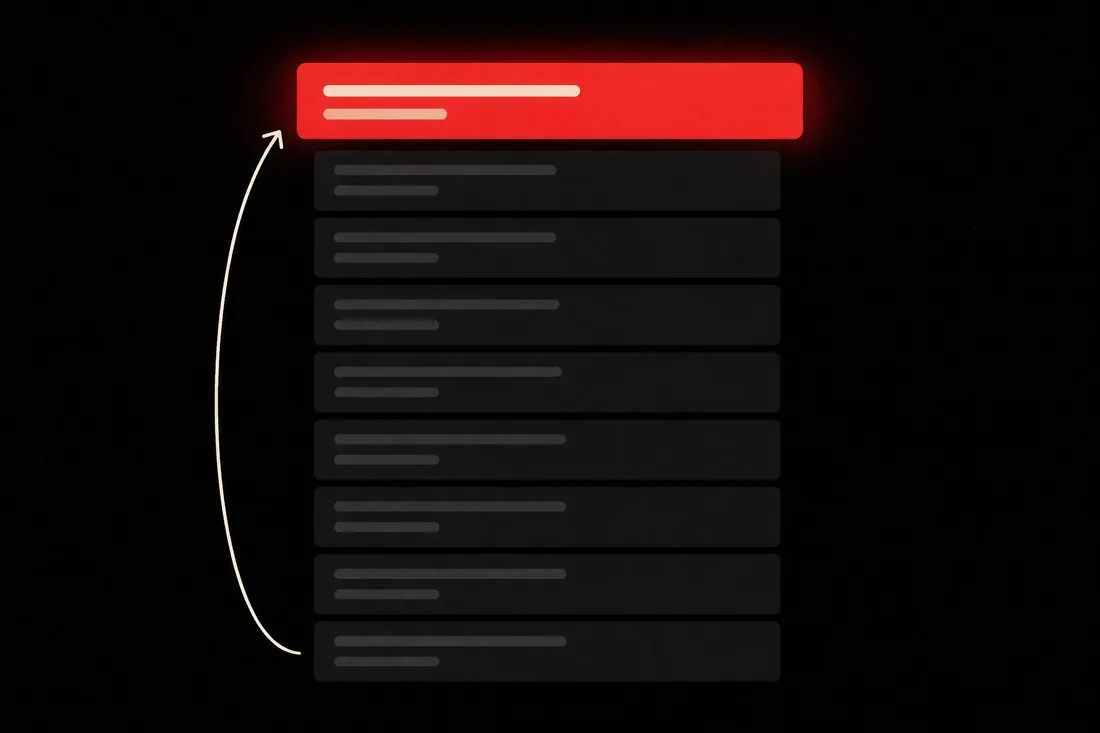
A list competes when it names the options the ranking lists name, plus one they missed.
So this settles the entry set off the live results before it writes a word.
No card required. See every tool and every price before you spend anything.
Run it on a top-10 keyword you already distrust.
Count the filler in what ranks today. Then read whether yours earned the slots. The account is free and takes no card.
No card required. See every tool and every price before you spend anything.
How it writes one
The list is researched before it is written.
Most listicles decide on ten and then invent nine and a half. This one settles what belongs on the list from the live results first.
- 01
Give it the keyword and pick Listicle
A real format setting, not a line added to a prompt. It changes the outline, the headings and the scoring.
- 02
It reads the lists ranking right now
The live top ten for your keyword, checked for the entries they share and the gaps between them.
- 03
The entry set is fixed in the outline
So nothing gets added later to reach a round number.
- 04
The company brief goes in
Client context from their own website, plus the topics to avoid. Nothing invented on their behalf.
- 05
Each list entry is written on its own
The introduction is written last, from the finished list.
- 06
Score, scan, publish
WordPress or stored credentials. Internal links are suggested at publish time. Meta tags only.
What lands in your account
A list that survives a skim.
- The article
- Headed, formatted, HTML ready for the blog. Or route it into a guest-post order.
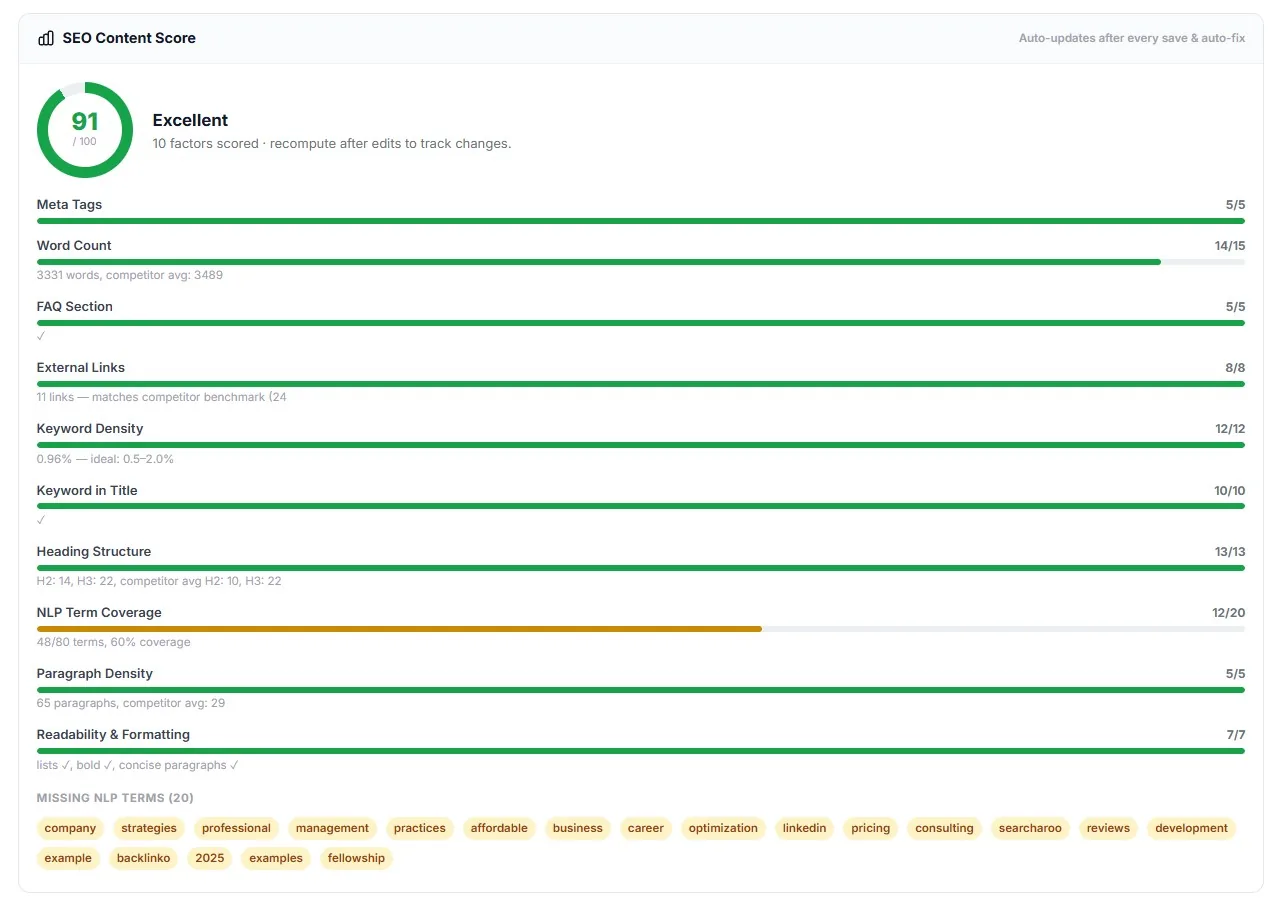
- A 100-point content score
- The same rubric every format uses, broken down by category.
- An AI-likeness report
- What the scanner flagged and rewrote. A local scanner, not a promise of a pass.
- Headlines, image and meta
- A meta title and description only. No list or item structured data.
A draft is $2. Publishing is free.
Headline options are 40¢. A failed run refunds itself. Credits don't expire.
No card required. See every tool and every price before you spend anything.
The countable part
What it costs and what it does.
- Format
- Listicle — one of eleven, set per article.
- The search it matches
- "Best X", "top 10 X", "X tools", "X tips". Someone who wants to skim options, whose results are ranked or grouped lists.
- Full draft
- $2.
- Headline batch
- 40¢.
- Featured image redo
- 80¢.
- Cost per finished list
- $2.40, headline options included.
- Publish to blog
- Included. WordPress or stored credentials.
- Company brief
- $2, once per client. Refunded if it fails.
- Failed run
- Refunded automatically. You don't pay for a broken draft.
- Research
- The live top ten for the keyword, checked for the entries those lists share and the ones only one of them names.
- Internal links
- Suggested at publish time. Not inserted during generation.
- What it does not do
- No structured data, including list and item markup — meta tags only. No detector pass claim. It has not used the things it lists.
- Delivery date
- We don't publish one. A made-up estimate breaks a promise faster than silence does.
Credit costs are the live values on your account, printed on the button that spends them. Dollar figures come off the same rate card that runs checkout.
What it costs to find out
Build the listicle free. You pay only for the draft.
Picking the client, the keyword and the format costs nothing. A draft is $2, and the button says so before it runs.
Creating the account is free. Not a trial that takes your card "for verification" — no card at all, and no call with anyone.
And nothing expires on a timer. Credits sit in the account until you spend them.
When you're ready to spend
$0.35–$0.50
per credit, improving with the volume you commit to
See the full pricing page →What you are not signing
No contract, no minimum, no quote and no call. Buy credits monthly if the volume suits you, or buy a block once and owe nothing after it.
Every deliverable in the platform prints its credit cost on the button that spends it, so you always price the work before you run it.
No card required. See every tool and every price before you spend anything.
Before you ask
The questions we'd ask before pointing this at a client.
- What does a listicle do for my search rankings?
- It makes the page eligible for a best-of search. Google answers those searches with lists, so a page in another shape isn't in the running. This writes the list, built from the entries the ranking lists carry.
- Isn't another top-10 post just more of the same?
- It is if it repeats the same ten picks. So the research separates what every ranking list names from what only one of them names. That second set is short, and it's where a better list comes from.
- Will this rank my page?
- We won't promise a ranking, because nobody honestly can. What it does is make the page eligible to compete: the right shape, and an entry set drawn from the lists above you. Links and the rest of the site decide the rest.
- Where do the entries come from?
- From the live top ten for your keyword. What those pages list, plus the gaps between them.
- Will it pad the list to reach ten?
- The entry set is fixed in the outline before any prose exists, which is the mechanical reason a filler pick can't get added later to hit a round number.
- Will it name my client's competitors?
- It can, and on this format that's usually correct — a list a reader trusts includes the obvious names. A client who can't appear beside a rival needs a different format.
- Will it pass an AI detector?
- We won't promise that. An on-board scanner flags machine-sounding passages, rewrites them, and reports what it changed. It is a local scanner and it cannot guarantee a pass on any commercial detector.
- What does a draft cost?
- $2 for a full draft. Headline options are 40¢, so a finished list is $2.40. Publishing is free.
A list that earns every entry,
on the search that only ranks lists.
Here's the part that has nothing to do with us. The padded list above your client collects the clicks because it exists and yours doesn't. Every month that carries on, the gap gets harder to close.
Picture six months out. Either you're still shipping filler at numbers eight through ten. Or every best-of keyword has a scored list with an entry set that was earned.
Run one on a keyword you know cold. Count the filler. That's the whole evaluation.
P.S. — Worried it'll invent junk picks? The entry set comes off the live results before a word of prose exists. Create the account, run one list, and skim entries four through ten first. No card to get that far, and $2 is the cheapest opinion you'll buy this month.
No card required. See every tool and every price before you spend anything.
The rest of Pro AI Writer