AI SEO Backlinks · Top 10 Listicle
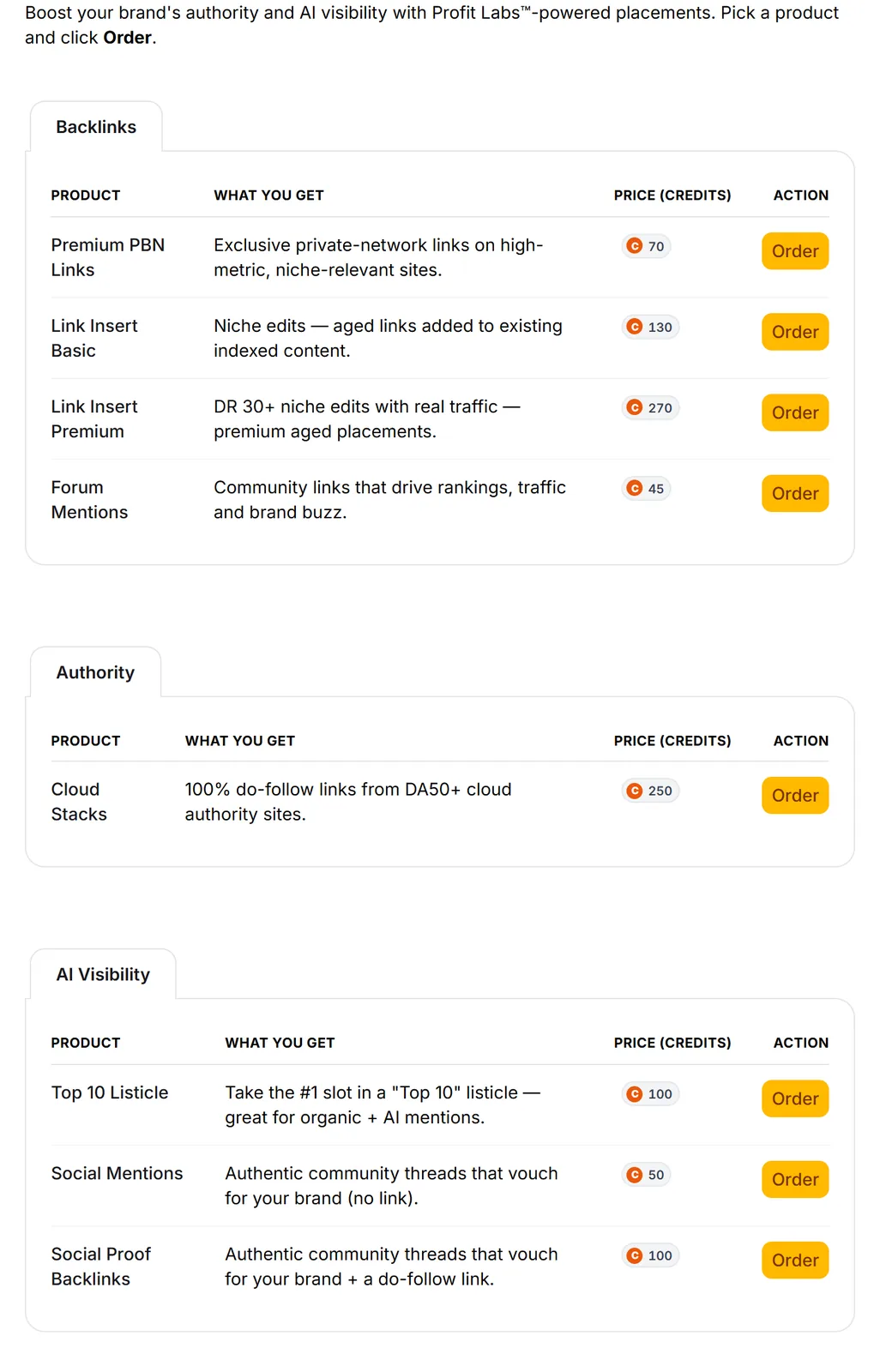
A Top 10 is the shape an answer copies. Be #1 in one.
Somebody asks who is best. A ranked list is what gets read. This puts your client at number one. $40 a listicle.
- A ranked list is the shape of the answer. — Ask who is best, and a Top 10 is what gets read.
- The #1 slot is the one that travels. — When somebody wants one name, the top of the list is it.
- Competitors sit in positions two to ten. — A list with one name is an advert, and nothing quotes an advert.
- It does not use your company brief. — Feeding your brief in would make the piece about you, which breaks the format.
- Eligible is not the same as named. — We sell presence in the source material. No answer is ours to promise.
- The deliverable is a screenshot, not a link. — A network whose placements can all be listed is a network that gets deindexed.
- Check before. Check again after. — Run a citation search by URL, buy the slot, run it again.
- $40 a listicle. — Order 1 to 25 at a time. The title draft is 10¢.
Get the #1 slot in a Top 10,
the format an answer copies.
Somebody asks who is best in a category.
The answer is assembled from pages that can already be found.
For that question, those pages are roundups.
A Top 10 is the shape of the answer. So a Top 10 is what gets read.
Being at number one is what makes a brand eligible to get named.
Nobody can promise the naming. Presence in the source is what you can buy.
No card required. See every tool and every price before you spend anything.
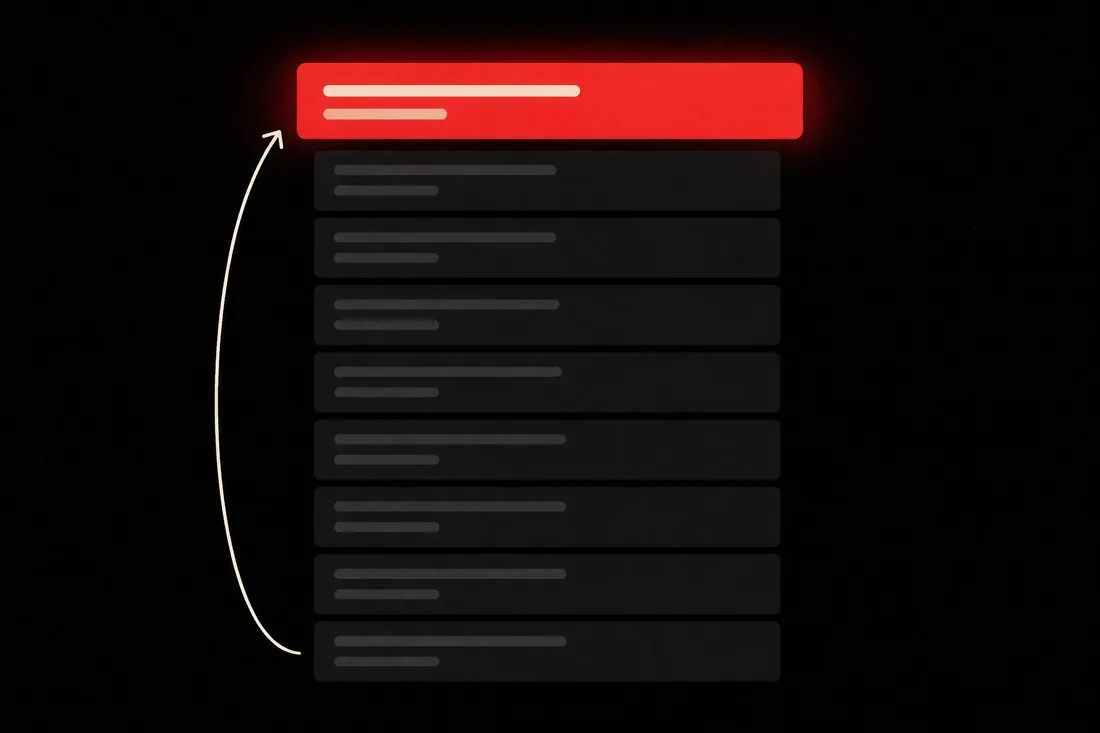
The uncomfortable part of buying a roundup
Your competitors get named. That is the deal.
Most link products hide the ugly bit. This one puts it near the top.
A top-ten list with only your client in it is not a listicle.
It is an advert with a title. Nothing worth quoting reads like that.
So positions two to ten carry other names. Real alternatives.
The format only works because they are there. That credibility is what you are buying.
If competitors beside your client is unacceptable, buy a niche edit instead.
And know this up front: we will not promise an assistant quotes it.
What you can buy is presence in the source material the answer is built from. Then you check.
Check whether any answer cites you at all first.
The account is free and takes no card. Search by URL and find out where you stand.
No card required. See every tool and every price before you spend anything.
How a listicle gets placed
Four fields, one roundup, top of the list.
The intake is short because the product is specific. You are buying a position in a format, not tuning an anchor profile.
- 01
Pick the client
Every order files under a client record. That is what makes the report findable later and keeps one client's screenshots out of another's document.
- 02
Give it the topic keyword
Up to 160 characters. This is the category the roundup covers — the thing somebody would ask an assistant about.
- 03
Write the listicle title
Up to 200 characters, and it always starts with "Top 10", because that is the format. Generate one for 10¢ if you'd rather edit than invent.
- 04
Name the company and the target URL
The business as it should appear at number one, and where the mention points. It does not use your company brief — competitors belong in the list.
- 05
Watch the status, not a clock
Draft, Submitted, In progress, Completed. We don't publish a delivery date, because we don't have one worth quoting. No completion webhook.
- 06
The screenshot lands in the report
Rendered inline in a branded report with your logo, filed under the client, downloadable as a PDF or saved to Drive.
What you end up holding
A screenshot of your client at number one.
Picture the next pitch. You scroll to the roundup and your client is at the top. Nine real alternatives underneath. You don't apologise for them.
- The #1 position, captured
- Your client at the top of a ranked list that reads like editorial, because it is written like editorial.
- Competitors in positions two to ten
- Yes, really. A list with one entrant is an advert, and nothing quotes an advert.
- A screenshot, not a link
- In the product's own words: "The deliverable is a screenshot, not a link. We do that deliberately, to avoid spam footprints and keep the network's domain metrics clean and authoritative."
- A branded report per order group
- Your logo, the client's name and site, the topic keyword and title recorded, screenshots inline.
- Refunds you don't have to chase
- Charged on acceptance, returned automatically if the listicle can't be placed.
A listicle is $40. The title draft is 10¢.
Charged when the order is accepted. Refunded on its own if it can't be placed. Credits don't expire.
No card required. See every tool and every price before you spend anything.
The countable part
What it costs and what it does.
- Cost
- $40 a listicle today, at the 1,000-credit plan rate. A smaller plan costs a little more per listicle, a bigger one less. The Order screen prints the cost before you confirm.
- Unit
- One listicle. Order 1 to 25 at a time.
- Position
- The #1 slot in a "Top 10" roundup.
- Deliverable
- A screenshot, rendered inline in the report. The deliverable is a screenshot, not a link.
- Topic keyword
- One per listicle, up to 160 characters.
- Title
- One per listicle, up to 200 characters. Always starts with "Top 10".
- Title generator
- 10¢. Editable before you order.
- Company brief
- It does not use your company brief. Deliberately — competitors are welcome in a listicle.
- Indexing
- Not offered on screenshot deliverables — there is no URL to submit.
- Report
- Branded HTML per order group, downloadable as PDF or saved to Drive.
- Refunds
- Charged when the order is accepted. Refunded automatically if it can't be placed.
- Delivery date
- We don't publish one. Status moves Draft → Submitted → In progress → Completed. No completion webhook.
$40 is today's price at the 1,000-credit plan rate, and the Order button prints the credit cost it spends. Outside networks fulfil these placements, so a supplier change can move the number.
What it costs to find out
Price the Top 10 #1 slot before you order one.
The account is free and needs no card. Open the catalogue and read what a listicle costs. It is $40 today, printed on the Order button.
Creating the account is free. Not a trial that takes your card "for verification" — no card at all, and no call with anyone.
And nothing expires on a timer. Credits sit in the account until you spend them.
When you're ready to spend
$0.35–$0.50
per credit, improving with the volume you commit to
See the full pricing page →What you are not signing
No contract, no minimum, no quote and no call. Buy credits monthly if the volume suits you, or buy a block once and owe nothing after it.
Every deliverable in the platform prints its credit cost on the button that spends it, so you always price the work before you run it.
No card required. See every tool and every price before you spend anything.
Before you ask
The questions we'd ask before pointing this at a client.
- What does a Top 10 listicle actually do for SEO?
- It puts your client at number one in the format an answer copies when somebody asks who is best. Answer engines assemble from pages they can find and trust, and for that question those pages are roundups. Being at the top of one is what makes a brand eligible to get named.
- Will buying this get me mentioned in AI answers?
- No. Nobody can promise that, and anyone who does is selling something they can't deliver. What you can buy is presence in the source material. Then run a citation check before and after and see for yourself whether anything changed.
- Why doesn't this use my company brief like the other products?
- Because it does not use your company brief on purpose. A top-ten roundup that features only you isn't a roundup. Competitors are supposed to be in it.
- So my competitors get named too?
- They do. That is the deal, and it is uncomfortable the first time you read it. The format only works because they are there.
- Why can't I have the URL?
- Because publishing URLs is how a network's placements become publicly enumerable, and an enumerable network is a deindexed one. The deliverable is a screenshot, not a link.
- What does one actually cost?
- A listicle is $40. The title draft is 10¢ if you generate one. Both figures print on the Order button before it spends anything.
- Do these get submitted for indexing?
- No, and they can't be. Index submission needs a URL to submit. This product delivers a screenshot, so there is nothing to send.
Get the #1 slot in a Top 10,
the format an answer copies.
Here's the part that has nothing to do with us. Every month, more buying questions get answered without a blue link. The pages those answers get built from are still mostly unbought. That will not last.
So you have two choices. Keep spending only on homepage authority that question never touches. Or get the #1 slot in a credible Top 10, and find out what happened.
Start with a citation check by URL. Then decide what the #1 slot is worth.
P.S. — I know why you're hesitating. It's the competitors in the list, and the screenshot instead of a URL. Both of those are the product working. And it isn't the $40. The account is free, there's no card, and every button prints its price before it spends. Run one citation check and read the catalogue first.
No card required. See every tool and every price before you spend anything.
The rest of AI SEO Backlinks