AI SEO Backlinks · Cloud Stacks
Some sites carry authority already. A do-follow link borrows it.
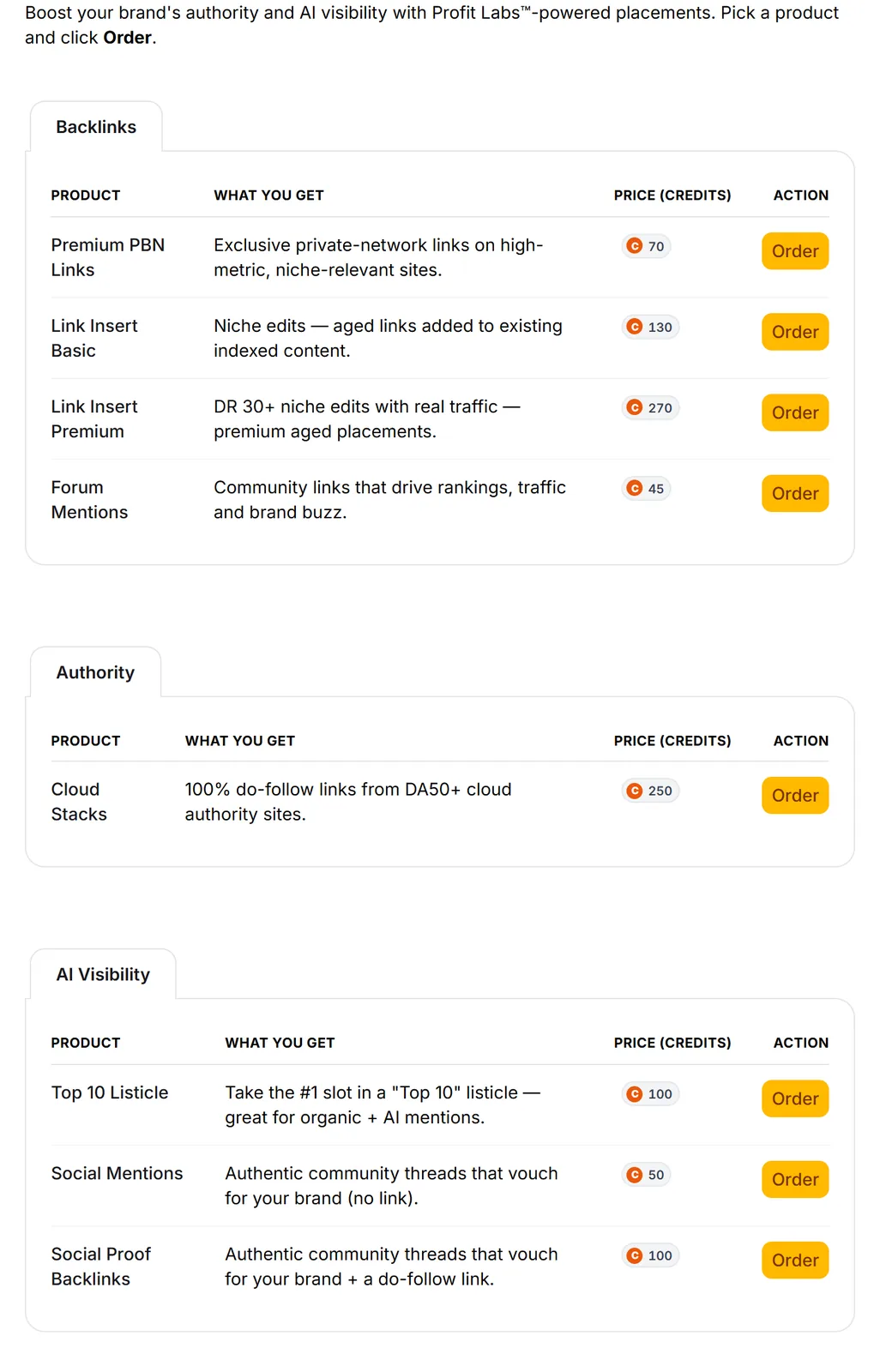
Do-follow links on DA50+ cloud properties. Do-follow is the part that matters. It is what lets a link pass credit. $100 a stack.
- A link is worth what the site is worth. — DA50+ cloud properties are worth more than an unknown domain.
- Every link is do-follow. — Do-follow is what lets a link pass credit. None of it is padding.
- DA50+ properties, every time. — That is the standard, and it is what you are paying for.
- AI answers lean on sources too. — Standing is part of why a source gets used at all.
- One link type looks bought. — This is the part of the mix that looks normal.
- Point this at your money site. — Tier 2 boosters are the ones you never point there.
- $100 a stack. — Order one to ten at a time. The description draft is 20¢.
- We do not publish a link count. — It comes from the network's live catalogue. The report lists what was built.
Do-follow links on DA50+ sites,
under everything else you build.
A link is worth what the site behind it is worth.
Search engines do not weigh every website the same.
Some big cloud platforms have standing built in. It came with the platform.
A do-follow link from one borrows that standing.
Do-follow is what lets a link pass credit. Every link in a stack is one.
So you do not build the trust. You borrow it.
No card required. See every tool and every price before you spend anything.
What one stack will and won't do
One stack won't move a hard keyword on its own.
We would rather say that now than let you expect it.
What a stack does is set a floor. A floor holds up whatever you put on top.
Here is why that matters to your rankings.
A profile made of one link type looks bought. To an algorithm, and to anyone who checks.
So mix it. Put the clean, trusted part underneath first.
Want one order to shift a hard keyword? Buy a niche edit. It is on the same account.
Look at the Cloud Stacks row before you order one.
The account is free and takes no card. Open the catalogue and read the row. Every number on this page is in there.
No card required. See every tool and every price before you spend anything.
How a stack gets built
Three things from you. The rest is ours.
This is the shortest order form in the family. The value is in where the links live, not in what you have to type.
- 01
Pick the client
Every order files under a client record. That is what keeps the report findable months later.
- 02
Describe the business
The properties need something real to say about the client. Write it yourself, or generate a draft for 20¢ and edit it.
- 03
Add one keyword and one link
One primary keyword. One target URL. That is the whole intake.
- 04
We build it on DA50+ properties
Platforms that have standing because of what they are. Every link is do-follow, so nothing in the stack is padding.
- 05
Watch the status, not a clock
Draft, Submitted, In progress, Completed. We don't publish a delivery date, because we don't have one worth quoting.
- 06
You send the links for indexing
A link does nothing for you until Google has it. One click per row from the report. It's not automatic and we won't say it is.
What you end up holding
The links, and the report that lists them.
Picture the next campaign review. Under the flashier placements sits the boring part. The part that makes the rest defendable.
- Do-follow links on DA50+ properties
- Every link passes credit. None of it is filler making up a count.
- The description that went out
- In your words, or in the draft you read and approved.
- An index status per link
- You click once. We track it until Google has it. Not automatic.
- A branded report per order group
- Your logo, the client, the keyword and the target URL. Client-ready.
- Refunds you don't have to ask for
- Credits come back if the stack cannot be built.
A stack is $100. The description draft is 20¢.
Charged when the order is accepted. Refunded on its own if it cannot be built. Credits don't expire.
No card required. See every tool and every price before you spend anything.
The countable part
The numbers, with nothing hidden.
- Cost
- $100 a stack today, at the 1,000-credit plan rate. A smaller plan costs a little more per stack, a bigger one less. The Order screen prints the cost before you confirm.
- Unit
- One stack. Order 1 to 10 at a time.
- Link type
- 100% do-follow. Every link in the stack passes credit.
- Properties
- DA50+ cloud platforms. We don't name them.
- Links per stack
- Not published. The count comes from the fulfilment side's live catalogue, so any number here would go stale. The report lists what was built.
- What you supply
- A business description, one primary keyword, one target URL. Per stack.
- Description generator
- 20¢. You edit it before you order.
- Indexing
- One click per row from the report, then tracked until indexed. Not automatic.
- Report
- Branded HTML per order group. Download it as a PDF or save it to Drive.
- Refunds
- Charged when the order is accepted. Refunded automatically if it can't be placed.
- Delivery date
- We don't publish one. The status moves Draft, Submitted, In progress, Completed. There's no completion webhook.
$100 is today's price at the 1,000-credit plan rate, and the Order button prints the credit cost it spends. These are built through outside networks, so a supplier catalogue change moves the number.
What it costs to find out
See the DA50+ stack price before you spend anything.
The account is free and needs no card. Open the catalogue and read what a stack costs. It is $100 today, printed on the Order button.
Creating the account is free. Not a trial that takes your card "for verification" — no card at all, and no call with anyone.
And nothing expires on a timer. Credits sit in the account until you spend them.
When you're ready to spend
$0.35–$0.50
per credit, improving with the volume you commit to
See the full pricing page →What you are not signing
No contract, no minimum, no quote and no call. Buy credits monthly if the volume suits you, or buy a block once and owe nothing after it.
Every deliverable in the platform prints its credit cost on the button that spends it, so you always price the work before you run it.
No card required. See every tool and every price before you spend anything.
Before you ask
The questions we'd ask before pointing this at a client.
- What does a Cloud Stack actually do for SEO?
- It puts do-follow links on DA50+ cloud properties. Search weighs a link partly by the site it sits on, and these platforms have standing that came with the platform rather than from anything anybody built at them. You borrow that standing instead of spending months earning it.
- Why does do-follow matter?
- Because a nofollow link tells search engines not to pass credit to the page it points at. Every link in a stack is do-follow, so every link in it counts.
- Will one stack move my rankings?
- We're not going to tell you it will. A floor is a floor. It holds up whatever sits on top of it, and no honest vendor can promise you a ranking from one order.
- Does this get my client named in AI answers?
- No promise, from us or from anyone with a straight face. Answer engines assemble from sources they can find and trust, so standing is one of the things that makes a brand eligible to be named.
- How many links are in a stack?
- We don't publish a count. It comes from the fulfilment side's live catalogue, not from anything in our code, so a number printed here would be wrong sooner or later. The report lists what was built.
- Should I point this at my money site?
- Yes. Cloud Stacks are a first-tier asset and they're built to point at the site you care about. Tier 2 boosters are the ones you never point there.
- Isn't this just Web 2.0 properties with a new name?
- The mechanism is related. You're building on platforms whose authority comes from the platform itself. What you're paying for is the DA50+ standard and every link being do-follow.
- Do the links index by themselves?
- No. Anyone telling you their links index themselves is guessing. You submit each row with one click from the report, and we track it until Google has it.
Do-follow links on DA50+ sites,
under everything else you build.
Here's the part that has nothing to do with us. Profiles built out of one link type keep getting cleaned up. Every year. The operators who come through it put something trusted underneath first.
So you have two choices. A month of flashy placements sitting on nothing. Or a DA50+ do-follow floor in the report, with the riskier links standing on something that looks grown.
Build the client's brief and get the keywords into the tracker first. Then build the floor, and you'll be able to see what's standing on it.
P.S. — It isn't the $100 that's stopping you. It's that "cloud stack" sounds like 2012. Fair. So read the standard again: DA50+, every link do-follow, one-click indexing. The account is free and needs no card. The price prints on the button.
No card required. See every tool and every price before you spend anything.
The rest of AI SEO Backlinks