Surprising fact: over 70% of new online sellers quit within a year because they picked a path without matching their goals.
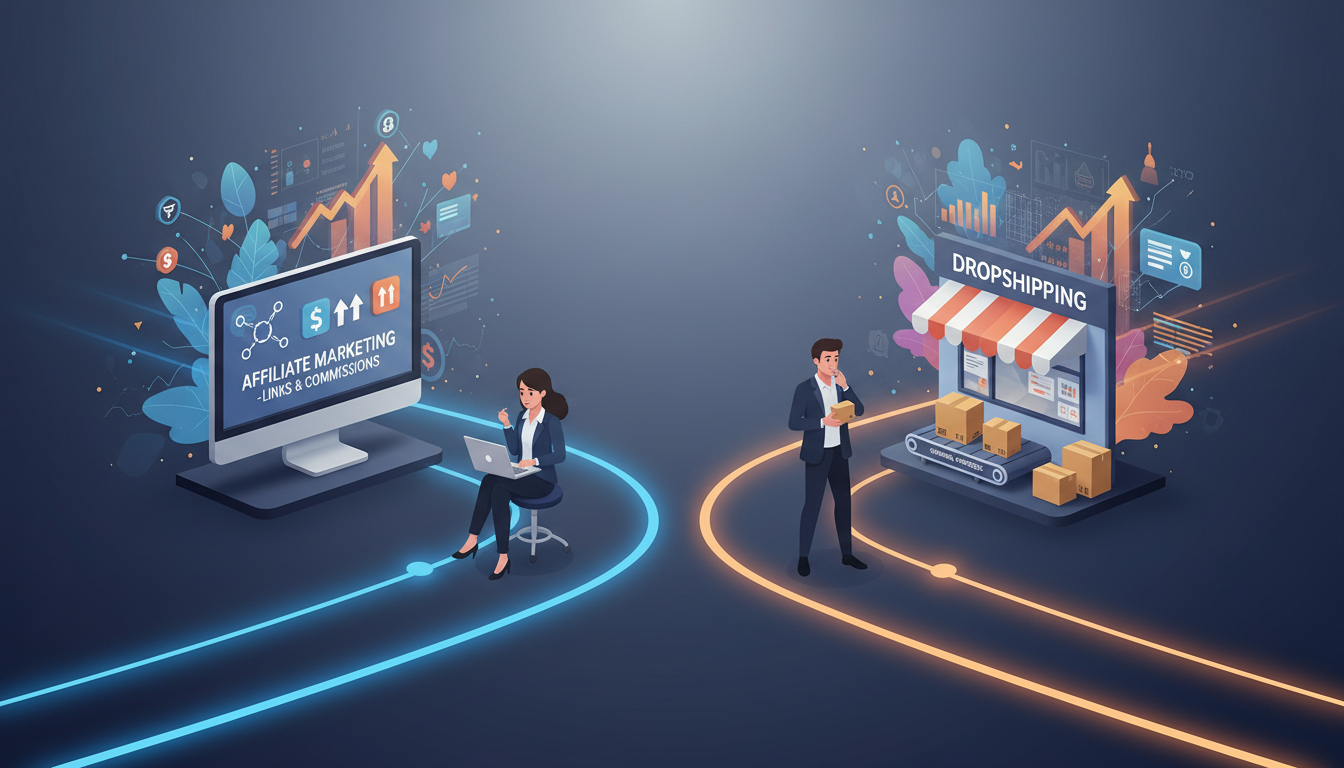
This quick guide helps you decide between two common online routes. One lets you earn commissions by promoting other brands. The other lets you sell physical items without holding inventory.
You’ll learn how each business model handles inventory, customer care, and startup cost. That makes it easier to match a plan to your time and budget.
Neither path is a get-rich-quick scheme. Both need effort, clear strategy, and steady traffic to grow into a lasting business. This intro sets the stage so you can choose a sustainable route and focus on the right next steps.
Key Takeaways
- Both paths lower upfront risk compared to traditional retail.
- One focuses on driving clicks and conversions; the other controls product selection.
- Inventory handling and customer service differ significantly.
- Startup cost and daily tasks help decide which fits your schedule.
- Success needs strategy, testing, and steady effort over time.
Understanding the Basics of Online Business
Before you pick a path, you need a clear view of how online revenue streams actually work. In 2025 the digital landscape shifts fast, so a basic grasp will save you time and money.
Both approaches let you run a low-risk online business without holding inventory or managing big warehouses. One route has you act as a referral partner while other companies handle orders and shipping.
The alternate route lets you build a retail-style presence. You curate a product catalog and rely on third-party suppliers to fulfill customer orders. That gives you control over branding and product selection.
Choosing comes down to whether you want to promote other brands or own the customer journey. Both paths reduce upfront costs and suit people with limited capital.
- Referral approach: low admin, simple tracking, focus on content and conversions.
- Retail approach: brand control, supplier management, inventory-less fulfillment.
- Success depends on agility, audience building, and consistent traffic.
Affiliate Marketing vs Dropshipping Which Is Better for Beginners
B
Choosing between these two paths comes down to whether you enjoy creating content or running a store. affiliate marketing often wins on simplicity because you don’t handle products, shipping, or returns.
On the other hand, dropshipping lets you shape a brand and set retail prices. That gives you more control over margins and how the store looks to customers.
Your personal skills matter most. If you like writing reviews, building an audience, and optimizing pages, the referral approach will feel natural. If you prefer product curation, ad funnels, and supplier relations, the store route rewards that effort.
Both paths are real ways to earn online, but neither is instant. Plan to learn, test, and refine your tactics. Choose the one that matches your time, strengths, and long-term business goals.
The Core Mechanics of Affiliate Marketing
Start by learning how tracking links and networks turn clicks into cash. This model relies on clear tracking and steady traffic to work well.
The Role of Affiliate Links
Your unique tracking link credits a merchant when a customer completes a sale. When someone clicks your link and buys a product, you earn a commission for that transaction.
Finding Profitable Programs
Networks like ShareASale, AWIN, and ClickBank make it easier to find programs and handle payouts. You join programs, grab creative assets, and place links on your website or social media.
- You don’t handle inventory or customer service, so you can spend time on content and audience growth.
- Your income depends on clicks that convert to sales, so quality traffic matters more than volume alone.
- Be aware: you have limited control over merchant prices or product quality, which affects profit and margins.
| Component | What It Does | Who Manages It | Impact on You |
|---|---|---|---|
| Tracking Link | Attributes sales to you | Network/Merchant | Enables commissions |
| Affiliate Program | Provides creatives and terms | Merchant/Platform | Guides promotion tactics |
| Traffic Source | Drives potential buyers | You | Determines income |
| Customer Service | Handles returns and questions | Merchant | Reduces your workload |
Key Advantages of Promoting Products as an Affiliate
Choosing to promote products opens low-cost ways to earn commissions from content you already create. With an estimated 80% of brands offering affiliate programs, you can find partners that match your niche and audience.
You don’t handle customer service or inventory. The merchant manages returns and support, so you avoid daily order headaches and can focus on growing traffic to your website or social media.
Startup costs stay small. Your main investments are hosting, tools, and time spent on content. A single helpful article or video can earn commissions for months.
- You can test different products and programs quickly without long-term commitments.
- Training and creatives from brands like Fiverr speed up promotion and reduce the learning curve.
- By focusing on content and audience growth, you improve long-term income and profit margins without supplier management.
The model scales with your audience. As you build trust, conversion rates rise and passive income becomes more realistic.
Potential Drawbacks of the Affiliate Model
It’s easy to forget that your commission checks depend on decisions made by someone else. You gain speed and low startup costs, but you also accept limits you can’t control.
Lack of price control hurts your margins. If a merchant cuts prices or changes fees, your profit per sale can drop overnight.
Managing Commission Fluctuations
Programs often change rates without much notice. That makes forecasting income tough and forces you to keep backups.
- Tracking problems with browser privacy or ad blockers can block your affiliate link and lose commissions.
- Some ad platforms restrict promotional links, so you may rely heavily on organic traffic to your website.
- Because you don’t own the product or the customer, service issues can damage your brand even when they aren’t your fault.
Bottom line: this model saves you inventory headaches, but it requires time to build trust and a plan to manage sudden changes from merchants.
How the Dropshipping Business Model Works
Think of dropshipping as running a retail storefront while suppliers handle the packing and postage. You create an online store, list products, and set prices. When a customer makes a purchase, you forward the order to a supplier who ships the item directly.
Nearly 30% of online stores use this fulfillment method because it removes the need for warehouse space. Modern apps connect your website to supplier networks and automate order forwarding.
You control branding and the customer experience. That gives you more say than simple referral models. But you must handle customer service and be the main contact for buyers.
Invest time vetting suppliers so the products meet your quality standards. Use platforms like Shopify or WooCommerce to manage catalogs and scale as sales grow.
| Step | Who Handles It | Impact |
|---|---|---|
| Product sourcing | You | Controls catalog quality |
| Inventory & shipping | Supplier | Reduces storage cost |
| Customer support | You | Shapes brand reputation |
Benefits of Running Your Own Dropshipping Store
Running your own online store gives you control over every customer touchpoint and the freedom to shape your brand voice.
Building a unique brand identity matters. You choose product images, packaging notes, and tone across your website and social media. That makes it easier to attract the right audience and build trust.
Building a Unique Brand Identity
You own pricing and profit margins, so you can set prices that match your goals. The Bicycle Booth shows how niche focus—cycling apparel—turns casual buyers into repeat customers.
You also control customer service and can personalize replies, returns, and product pages. That long-term value grows your business beyond single transactions.
Scaling Your Product Catalog
Testing new products is fast when you don’t hold inventory. Add items, measure sales, and remove losers without heavy cost.
With the right supplier and marketing dropshipping tactics on social media, you can expand your catalog, tune product pages, and boost profit as your website traffic and audience grow.
Common Challenges Faced by Dropshippers
When third-party vendors slip up, you usually feel the fallout in customer complaints and refunds.
Navigating Supplier Quality Issues
Limited control over fulfillment is a core challenge in the dropshipping business. If a supplier ships the wrong product or delays an order, it damages your brand and forces you to handle the complaint.
Vet partners carefully and spend time testing sample orders before you list products. Reliable services like Printful are worth considering for print-on-demand apparel and home items because they tend to reduce errors.
Stock and inventory gaps also hurt sales. You don’t hold items, so sudden shortages at the supplier can leave customers frustrated and trigger refund requests.
Price competition pushes many sellers to lower margins. You must balance competitive pricing with the need to keep profit and still offer good customer service.
Be proactive: document supplier SLAs, monitor order accuracy, and respond fast to customer issues. Strong supplier relationships and quick service keep customers happy and protect your ecommerce brand.
Comparing Startup Costs and Financial Risks
Compare upfront costs and risk to figure out which model fits your budget and tolerance.
Quick snapshot: affiliate marketing is a $17 billion industry, while the global dropshipping market reached $301 billion in 2024.
Both models keep inventory risk low because you don’t buy large stock. That makes startup costs smaller than traditional retail.
With the referral route you mainly pay for hosting, a domain, and tools. Your financial exposure stays low, but your income depends on merchant commissions and program changes.
Running a store costs a bit more. You need a platform, product listings, and often an ad budget to drive sales. That gives you more control over margins and prices, but it raises short-term costs.
“Know your burn rate and plan for ad tests before you scale.”
Bottom line: choose the path that matches your capital and risk appetite. Both require steady traffic and smart testing to turn costs into profit.
Essential Skillsets for Success in Each Model
Success online depends less on luck and more on the skills you bring each day. Choose to sharpen the right abilities and you speed up results.
Content Creation Skills
You must write clearly and often. Nearly 65% of people in the referral field drive traffic by blogging. That shows how vital strong content is for clicks and conversions.
Focus on headlines, clear calls to action, and honest reviews. That helps readers trust your links and boosts income over time.
Market Research Techniques
Running a store or a referral site needs smart research. Use trend tools, competitor checks, and supplier tests to find winning products.
- Validate demand before listing items.
- Compare prices, supplier lead times, and quality samples.
Customer Service Proficiency
If you manage an online store, you handle returns and questions. Quick, polite replies protect your brand and lower refund rates.
Even referral sites benefit from good service—answer comments, fix broken links, and keep your audience loyal.
Evaluating Long Term Earning Potential
Your choice between affiliate marketing dropshipping should weigh how you build lasting value. The affiliate industry sits near $17 billion while the dropshipping market hit $301 billion in 2024.
Long-term gains come from systems and trust. With the referral route, quality content and a steady website can earn commissions years after publication. That passive income rewards time you invest early.
By contrast, the store route can deliver faster profit when you spot trends and market high-ticket products. Your margins depend on product selection, supplier costs, and how well you manage customer service.
In both paths, audience growth matters most. More traffic means more sales or more commission checks. Focus on reliable content, clear funnels, and tracking so you can scale without losing quality.
“Build processes that keep customers happy and content that keeps converting.”
- Passive revenue favors content and links that age well.
- Active profit favors curated products and tight margin control.
- Both require time, testing, and consistent attention to customers and sales.
Choosing the Right Path for Your Goals
Match your strengths—content creation or product operations—to the model you’ll enjoy running.
If you love writing, building an audience, and creating useful content, the referral route rewards steady work with low startup costs. You can earn commissions through links and focus on SEO and social media to grow traffic.
If you prefer product strategy, branding, and direct customer service, an online store gives you control over pricing, packaging, and profit. You’ll manage suppliers, solve order issues, and shape the customer experience.
Many entrepreneurs blend both models. Use helpful articles to drive traffic and links, then funnel engaged readers into a store that sells related products. That combo can lift income and build brand equity over time.
“Let your daily habits and goals guide the decision, not hype.”
- Start simple if you need low risk and fast setup.
- Pick a store if you want long-term brand value and higher margin control.
- Combine content and commerce when your audience grows.
Ultimately, your goals should dictate the path. Assess your time, budget, and strengths, then commit to learning and testing until you find a repeatable route to profit.
Conclusion
Pick the path that matches your daily habits and the way you like to build value online, .
Both affiliate marketing dropshipping offer low-cost ways to start with limited financial risk. One lets you focus on clear, helpful content and earn a steady commission. The other lets you shape a branded store and control your margins.
Success in either route needs steady effort, audience focus, and the ability to adapt to trends. Choose the approach that fits your skills and long-term goals, then commit to testing and learning until you find a repeatable path to profit.
FAQ
What are the main differences between affiliate marketing and dropshipping?
One model has you promoting someone else’s products via links and earning commissions on sales. The other lets you sell products through your own online store without holding inventory, but you handle pricing, returns, and supplier relationships. Both let you sell online, but they differ in control, margins, and customer responsibilities.
How much money do you need to get started with each model?
You can begin promoting products with little to no upfront cost if you use content platforms or social media. Running a store usually requires some budget for a website, hosted platform fees like Shopify, paid ads, and sample orders. Startup costs tend to be lower when you focus on creating content and linking to merchant offers.
Which option requires less customer support work?
Promoting merchant products typically means the seller handles shipping and returns, so you deal with fewer customer-service issues. Running a store puts you between buyers and suppliers, so you’ll handle inquiries, refunds, and disputes more often.
How fast can you start earning with either approach?
Earnings depend on your audience and traffic. You can earn quickly if you have a built-in following or run effective paid ads. Organic growth via content or social channels takes longer but builds more sustainable income. Dropshipping may require more testing of products and ad campaigns before you see profit.
Do you need a website to succeed?
You don’t always need a website to promote merchant links—social platforms, YouTube, and email can work. A site helps with branding, SEO, and long-term traffic for a store or content hub. Many creators combine both: a blog or landing page alongside social profiles.
What about control over product pricing and branding?
Running a store gives you pricing control and lets you build a brand around product selection and customer experience. Promoting offers via links limits your control—you follow the merchant’s pricing and terms, though you can choose which products to promote.
Which model has higher profit margins?
You can earn higher margins with your own store if you price smartly and manage costs. Commissions on merchant sales vary and can be low for some categories, but you avoid inventory and shipping costs. Profitability depends on niches, ad spend, and conversion rates.
How important is audience vs paid traffic?
An engaged audience reduces your reliance on paid ads and lowers acquisition costs. If you lack an audience, well-targeted paid traffic can speed results, but it raises your breakeven point. Both models benefit from a mix: organic reach plus strategic paid campaigns.
What platforms and tools should you consider first?
For links and content, consider YouTube, Instagram, a blog on WordPress, or email tools like ConvertKit. For a store, Shopify, WooCommerce, and suppliers on AliExpress or CJdropshipping are common. Analytics, ad platforms, and customer-service tools are useful across both paths.
How do commission rates and product margins affect choice?
Higher commission rates make promotional work more profitable at lower volume. For a store, larger product margins give you budget for ads and returns. Evaluate average order value and lifetime customer value to decide which path better supports your goals.
What common mistakes should you avoid starting out?
Avoid chasing trendy products without testing, neglecting quality checks for suppliers, and over-relying on a single traffic source. Also, don’t ignore terms of merchant programs, and don’t scale ad spend before validating product-market fit.
How long before either model becomes a reliable income stream?
Many people see meaningful results in 3–12 months with consistent effort. Timelines vary by niche, content quality, ad strategy, and your ability to iterate. Treat the early months as testing and learning phases.
Can you combine both approaches?
Yes. You can run a store and also promote complementary merchant products to diversify income. Many creators link to merchants in content while offering branded products in their store to capture different buyer intents.
What skills should you build first?
Focus on content creation, basic ad setup, product research, and customer-service skills. Learn SEO and social media growth tactics to attract traffic without high ad spend. These skills transfer well between promoting links and running a store.
How do supplier issues affect a dropshipping store?
Unreliable suppliers lead to late shipments, poor product quality, and refund headaches. Vet suppliers with test orders, check reviews, and maintain backup sources. Clear policies and communication reduce disputes with customers.
Are there legal or tax considerations to know?
Yes. You should register your business as required, track income for taxes, and follow advertising and disclosure rules when promoting links. For a store, comply with consumer protection laws and keep records of transactions and returns.
What metrics should you watch to measure success?
Track conversion rate, average order value, customer acquisition cost, return rate, and profit margins. For content, monitor traffic, click-through rate on links, and referral sales. Data helps you decide where to invest time and money.