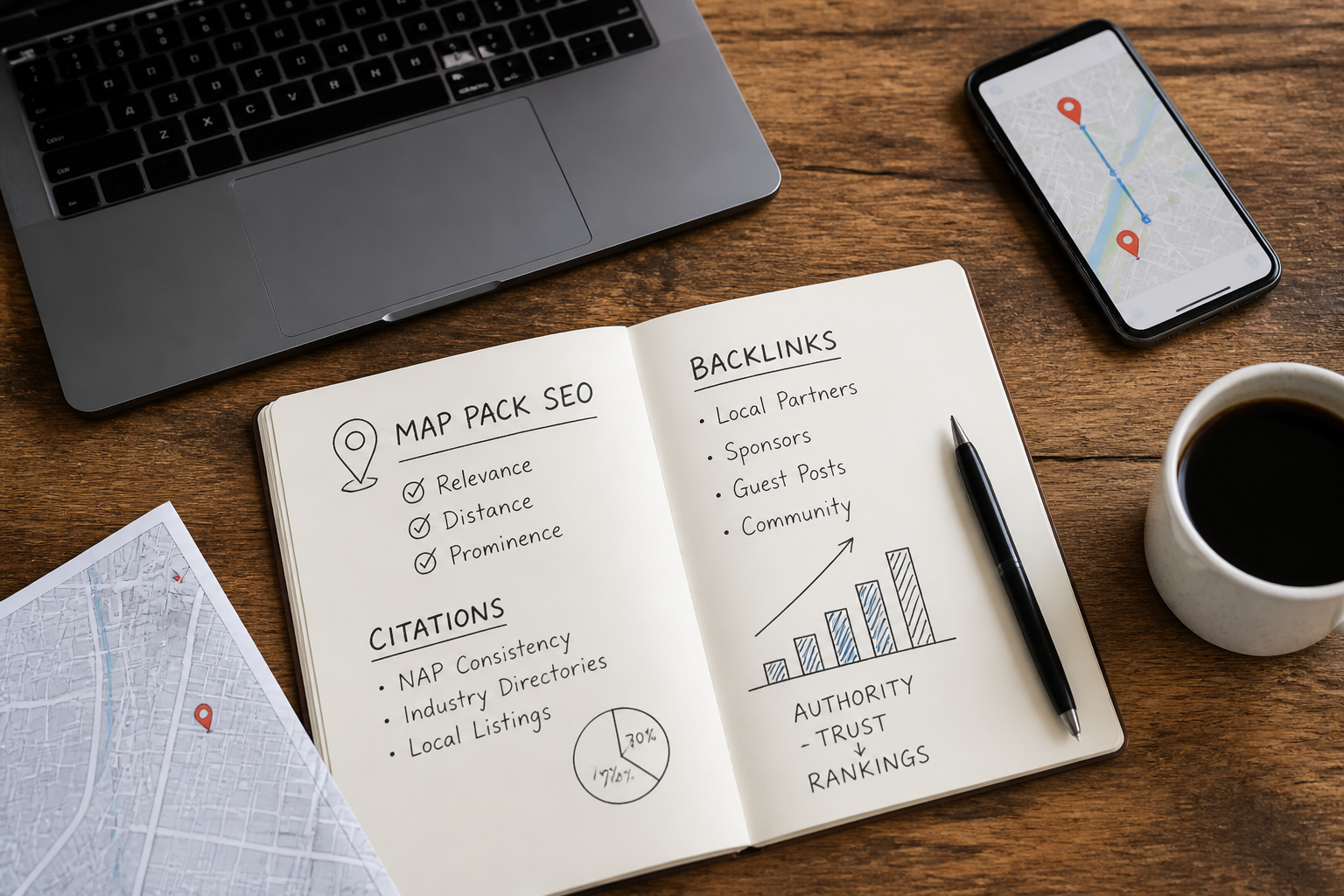
Most business owners build backlinks first and citations never. That's backward, and it's the number one reason three-pack rankings stall out after month two. Here's the blunt truth about map pack seo: Google's local algorithm leans hard on consistency before it ever cares about authority. If your name, address, and phone don't match across thirty directories, the fanciest PBN link in the world won't save you.
Think about the last time you searched for a plumber or a dentist near you. You picked one of the three listings up top without a second thought — that's the map pack, and getting into it isn't luck. It's sequence. Citations lay the foundation. Backlinks amplify what's already stable. Skip the order, and you're pouring links onto a profile Google doesn't fully trust yet.
No guesswork, no vague advice about "getting more reviews." Just the ratio that gets a real business from page two of the map into the top three, and keeps it there once daily rank swings start testing your patience.
What You'll Achieve and What You Need Before You Start
Picture a plumbing company with 30 directory listings and a dozen backlinks, stuck on page 2 of the map results for three years straight. That's the exact spot where a clear map pack seo plan pays off — because fixing the wrong thing first wastes months. By the end of this guide, you'll know which asset to build first, how to check your current standing, and how to track movement week over week.
The Tools: A Rank Checker, A Citation List, and a Spreadsheet
Grab a rank checker (Semrush's map tracker works fine), a spreadsheet listing your existing citations, and 20 minutes. Nothing fancy required here.
Why Citations and Backlinks Get Confused (and Why Order Matters)
Owners lump citations and backlinks together constantly — they're not the same tool. Citations establish trust and consistency. Backlinks push authority. Skip the order, and you'll spin your wheels for months.
Step 1: Audit Your Current Google Business Profile and Map Pack Ranking
Stop guessing where you rank. Before you buy a single citation or link, pull up your Google Business Profile and check where it actually sits for your priority terms today. Any map pack seo plan built on assumptions instead of a real baseline is going to waste budget fast.
Using a Google Maps Ranking Checker to Set Your Baseline
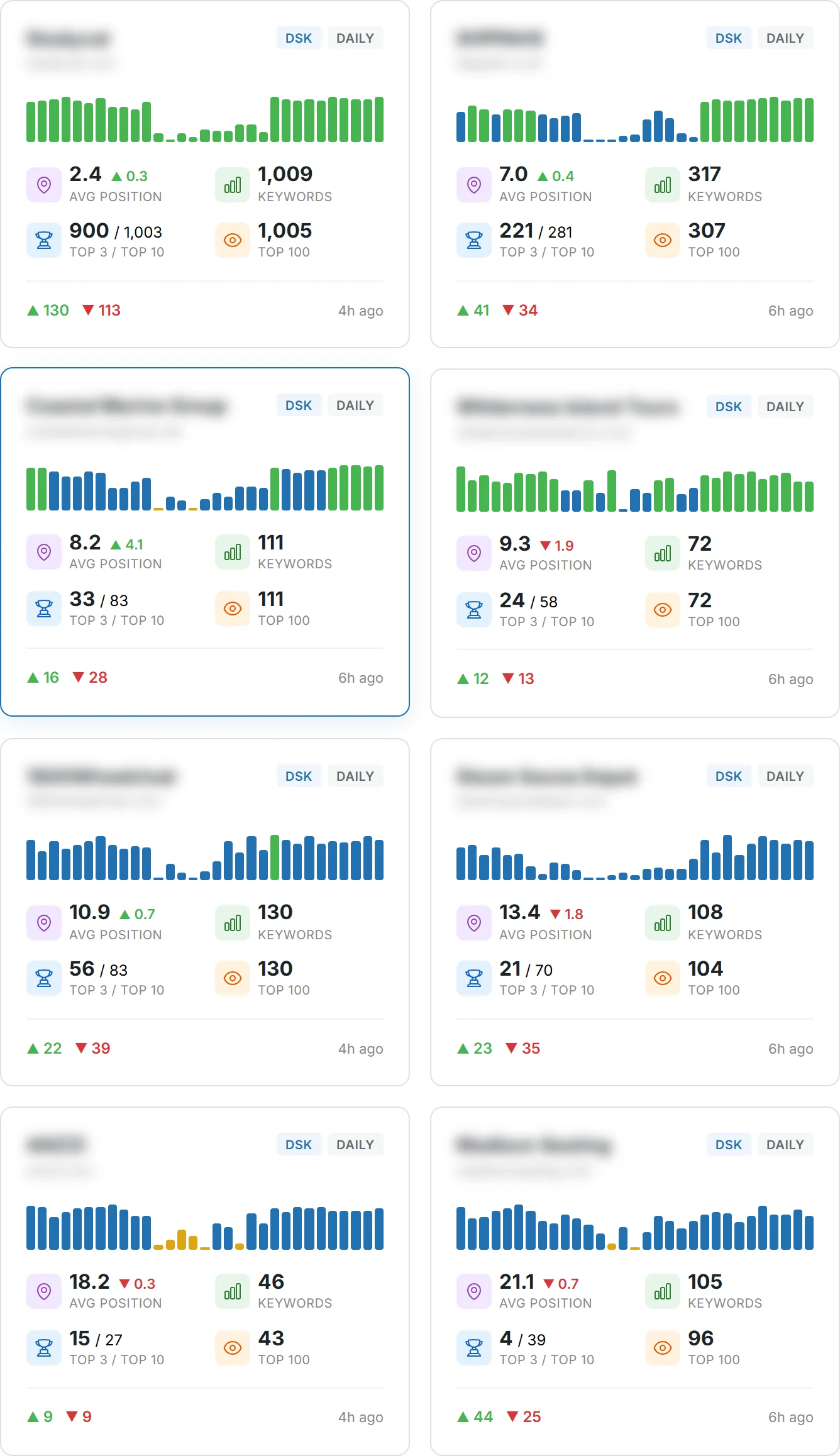
Run your business name and target keyword through a Google Maps ranking tool from a few different points across your service area — not just your office address. Rankings shift block by block, and a single center-point check hides that. Log the numbers now, so you've got something real to measure against once citations start landing.
Spotting NAP Inconsistency Before You Build Anything New
Next, check every existing listing for name, address, and phone mismatches. Old suite numbers, dropped abbreviations, a phone line you retired two years ago — this stuff quietly caps rankings. Fix it before adding new citations, or you're just piling more inconsistency on top.
Step 2: Lock Down Your Core Citations First
How many directories has your business actually claimed? Most owners guess 5 or 6. The real number needed for solid map pack seo is closer to 30, and that gap is exactly why competitors outrank businesses with better reviews and a nicer website.
The 30-Listing Foundation Most Businesses Skip
Thirty relevant local and niche directories form the base layer every local ranking sits on. Skip this step and every other tactic — Google Maps SEO included — gets built on a shaky foundation. In practice, we see businesses jump straight to link building while their profile has 4 listings. That's backward.
Matching Name, Address, and Phone Across Every Directory
Here's what most people miss: one mismatched suite number or an old phone line kills trust signals Google relies on. Check your name, address — phone character by character across every listing — not just the big ones like Google Business Profile. Consistency here isn't optional. It's the whole game.
Step 3: Layer in Local, Niche, and Industry-Specific Citations
30 consistent directory listings is the baseline most map pack seo campaigns need before rankings budge — anything less and you're leaving gaps Google can't fill in on its own. Once your core citations are locked, the real gains come from layering in sources that speak directly to your industry and service area.
Generic directories get you in the door.
Niche ones tell Google (and searchers) you actually belong in this category. A roofing company listed on a home-services directory carries more weight for local rankings than another entry on a generic business site nobody checks.
Pair that with geo-targeted signals from a proper Google Maps ranking service, and you're pushing relevance across your entire service area — not just the zip code your office sits in.
Prioritize in this order:
Industry-specific directories with real traffic
Local chamber and regional business listings
Niche platforms your competitors haven't claimed yet
Step 4: Build Tier 1 Backlinks Pointed at Your Google Business Profile
Why a PBN Link Aimed at Your GBP Beats a Random Guest Post
Here's a myth that needs killing: more guest posts always beat fewer, better links. Not true. A guest post on some random blog does almost nothing for your map pack seo push if it's not relevant and not pointed at the right asset. A private-network link aimed directly at your Google Business Profile, on a high-metric domain in your niche, moves the needle faster because Google reads it as a direct trust signal to the exact listing competing in local results.
Guest posts are still useful — but treat them as support links to your website, not your map ranking. Once your Tier 1 links are live, pull up your local rank tracker weekly and watch how fast your position shifts across the grid, not just one spot check.
Step 5: Add a Service-Area Radius Booster for Suburb-Level Visibility
Picture a plumbing company sitting downtown but landing zero jobs from the suburb 12 miles out — even though trucks roll out there every week. That gap is exactly what a radius booster fixes. It's a set of keyword-tagged pins spread across your whole service area, published on a live map, so the map pack seo signal doesn't stop at your office zip code.
Here's what most people miss: citations tell Google where you're based, but they don't tell it where you're willing to drive. A radius booster does. Once it's live, run a Google Maps rank checker across five or six surrounding towns — not just your home city — to see where you actually show up.
Realistically, this step matters most for service businesses without a storefront in every suburb. Skip it, and you're invisible exactly where the demand is.
Step 6: Stack Tier 2 Links to Boost Your Citations and Local Pages
Citations alone don't move a map pack seo campaign — they need backup. That's where Tier 2 links come in. Point volume links at your Tier 1 assets (citations, guest posts, press coverage) instead of your money site directly. This charges up the pages already vouching for your business, and that authority flows uphill to your Google Business Profile.
Here's the safe stacking order:
Never point Tier 2 links at your main domain — aim them at citations and syndicated pages instead
Use web 2.0 properties and authority-tiered network links (DA30 through DA70+) to reinforce citation pages
Pool keywords across orders so the link profile looks natural, not templated
Group everything into one report so you can track what's boosting what
Skip this step and your citations just sit there. Stack it right, and your local pages start climbing the map ranking metric faster than citations built alone.
Step 7: Track Map Pack Movement and Adjust Your Ratio Over Time
Reading a Map Rank Tracker Without Overreacting to Daily Swings
Why do your positions jump three spots overnight for no reason? Because Google's map algorithm shifts constantly based on searcher location, device, and even time of day. A single day's dip isn't a verdict on your map pack seo plan — it's noise.
Pull data weekly, not daily, from a map rank tracker or a tool like Semrush's map rank tracker. Look at trend lines across 30 days, not single snapshots. If citations and backlinks are working, you'll see:
Gradual upward movement across target keywords
Wider geographic spread in a rank checker's grid view
Fewer volatile drops after each new batch of links
If rankings stall for 6-8 weeks, shift ratio — add more citations if profile trust looks thin, or more backlinks if competitors out-link you. Adjust one variable at a time, then track again before the next change.
Common Mistakes That Stall Map Pack Rankings
Roughly 30 relevant local — niche listings make up a solid citation base — yet most business owners skip straight to link building before that foundation is even half done. That's backward, and it's the number one reason a map pack seo plan stalls at page two of the local results.
Building Backlinks Before Citations Are Consistent
Here's what most people miss: Google cross-checks your name, address, and phone across every listing before it trusts new links pointed at your Google Business Profile. Mismatched suite numbers or an old phone number sitting on ten directories will quietly cap your ranking — no matter how many links you buy.
Ignoring Reviews While Chasing Links
And that's exactly why chasing backlinks while reviews go unanswered backfires. Review volume and recency feed directly into map pack ranking signals. A business with 40 recent, responded-to reviews will often beat a competitor with more links and a stale profile.
Verifying Your Map Pack SEO Plan Is Actually Working
Here's a myth that costs businesses real money: ranking number one for your brand name proves your map pack seo plan works. It doesn't — anyone finds you when they already know your name. The real test is whether strangers searching generic terms in your service categories see your pin. Track that instead.
Pull a Google Maps ranking checker or a free local rank checker weekly, not monthly. Citations and backlinks move slowly, so short gaps hide progress and mask problems. Watch three things:
Position on non-branded category searches
Google Business Profile call and direction clicks
Review velocity compared to competitors in the pack
If citations went out four weeks ago and your ranking hasn't budged, check for NAP mismatches first. That's usually the culprit — not the strategy itself.
How-To FAQ
What is a map pack in SEO?
The map pack is the block of three business listings Google shows above organic results for searches with local intent, complete with a small map, star ratings, and a "more places" link. Getting into that block matters more for phone calls and foot traffic than almost any other ranking spot — it's the first thing a searcher's eye hits.
How long does it take to see movement after building citations and links?
Most businesses see the first shift in 3 to 6 weeks, once citations are consistent and the first round of Tier 1 links has had time to get crawled and indexed. Full ranking gains from a layered plan — citations, links, and a radius booster together — usually take 90 to 120 days. Don't judge it at day 10. That's just noise.
Should I fix NAP inconsistency before or after building new backlinks?
Fix it first, always. Pointing new links and citations at a Google Business Profile that already has mismatched name, address, or phone data across existing directories just reinforces the confusion Google is trying to resolve. Clean the foundation, then build on it.
Is it safe to use PBN links pointed at my Google Business Profile?
Yes, when they're built with real domain authority and pointed at the profile rather than stacked onto your money site. This is a named, deliberate layer in a map pack plan — not something to hide. The risk isn't the link type, it's sloppy execution: spammy anchor text, low-quality domains, or dumping too many at once.
How many citations do I actually need before backlinks start working?
Thirty consistent local and niche directory listings is the baseline most map pack campaigns are built on. Skip this step and backlinks end up propping up a shaky foundation — you're basically building the second floor before the first one's framed. Get the 30 locked in, matching name, address, and phone exactly, then move to links.
Why did my map pack ranking drop after I added new links?
A short dip after a new link push is common and usually temporary — Google re-evaluates trust signals as new data comes in, and a rank tracker checking daily will show swings that smooth out within a week or two. If the drop lasts more than 3 weeks, check for NAP mismatches introduced by the new citations first. That's the usual culprit, not the links themselves.
Here's the order that actually moves a map pack: fix the name, address, and phone match across every directory, then build the citation base, then point real links at the Google Business Profile. Skip that sequence and even strong backlinks end up propping up a listing with cracked foundations. Map pack SEO rewards businesses that treat citations as infrastructure — not busywork — and save the link-building budget for once that infrastructure is clean. A radius booster only pays off after the core 30 listings are locked. A Tier 2 stack only matters once there's a Tier 1 asset worth boosting. And none of it means anything if nobody's checking the rank tracker weekly to see what's actually happening.
Businesses that get this right aren't smarter — they're just patient enough to build in order. So pull up the current Google Business Profile, run the NAP audit first, and don't touch a single backlink until every directory listing matches. That one fix, done properly, moves more map pack rankings than most link campaigns ever will.