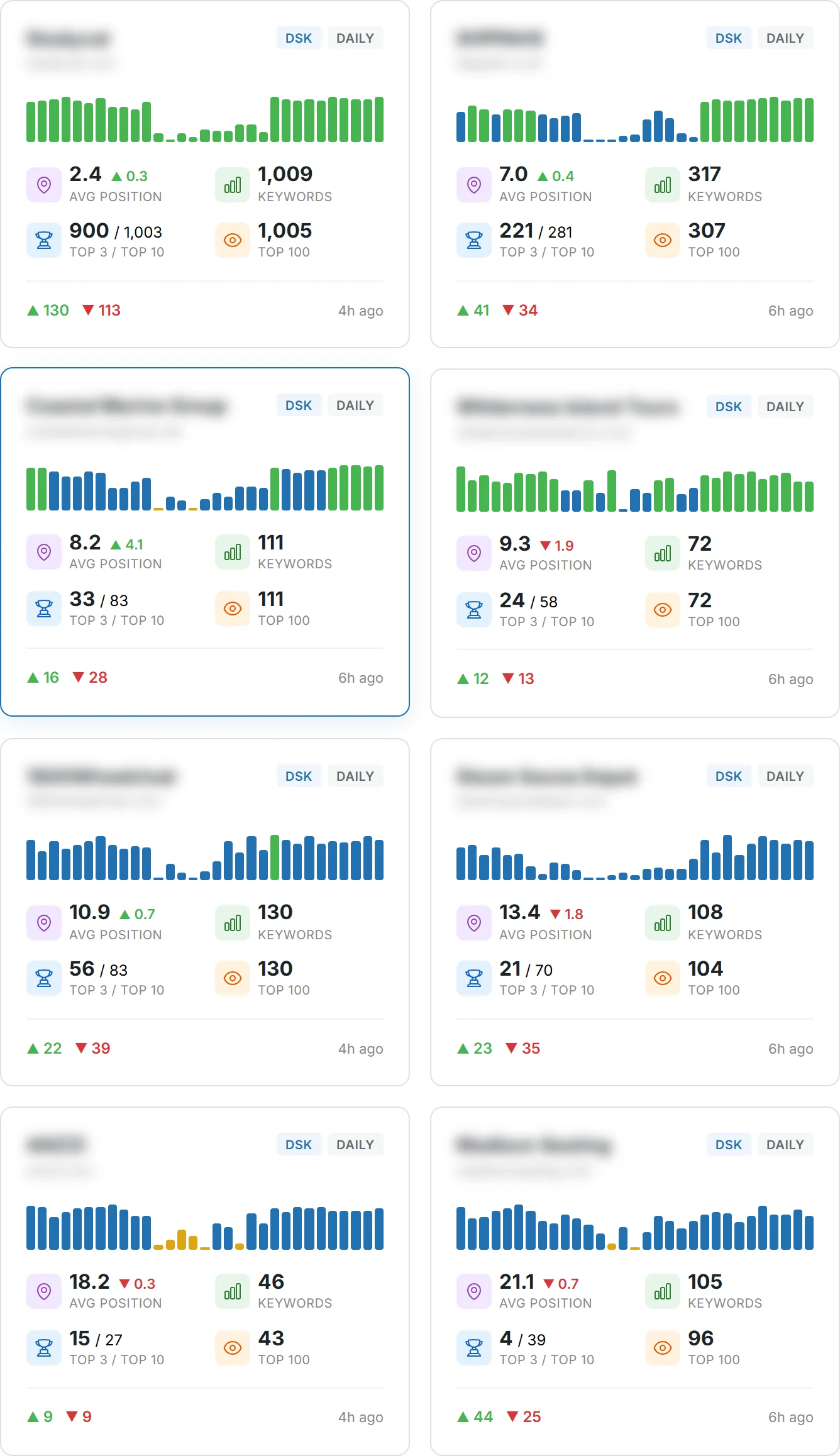
Top Picks at a Glance
Cloud stack links — clean do-follow trust signal, no spam footprint
Google Business Profile stacking — pushes local entities into the map pack
Stacked Web 2.0 and site properties — widens entity footprint for AI answers
Tier 2 boosters layered on top — multiplies authority you already paid for
Indexing and verification — turns a stack into provable, reportable results
96.55% of published pages get zero organic traffic from Google. Zero. If that number doesn't make you rethink how you build authority for a client site, nothing will. A lot of freelancers hear "stacking" and picture some shady PBN trick from 2015 — but Google stack backlinks are a different animal entirely, and they're arguably more relevant now than they were five years ago.
Here's why: search results aren't the only prize anymore. AI answer engines are pulling from the same trust signals Google has always cared about — entity authority, semantic relevance, crawl history — and a well-built stack feeds both at once. Cloud properties, Google Business Profile pins, Web 2.0 assets, Tier 2 boosters pointed at Tier 1 links instead of the money site — each layer does a specific job, and skipping the order is how a stack gets devalued instead of ranked.
The freelancers managing five or ten client campaigns at once don't have time to guess. They need a structure that's reportable, verifiable, and safe enough that one bad footprint doesn't tank the whole account. That's the real question worth answering: not whether stacking works, but which pieces of it actually move rankings and which ones are just noise dressed up as strategy.
What Google Stacking Actually Means Before You Buy Any Links
Picture a freelancer with six clients, each needing links pointed at a Tier 1 asset without touching the money site. She sets up a batch of Google properties — Sites, Docs, Drawings — cross-linked to build a private cluster that passes trust downhill. That's the whole idea behind Google stack backlinks: cloud-hosted pages, owned by Google itself, wired together to boost a target page's ranking without spam flags.
The Difference Between Stacking Cloud Properties and Building a Private Network
A private blog network uses independent domains you register and host yourself. A cloud stack skips that entirely — every page lives inside a Google-owned domain, so search engines treat it as inherently trustworthy. Less footprint risk, less maintenance, same lift.
Why This Matters More Now That Answer Engines Are in the Mix
Here's the thing — AI answer engines pull from indexed, trusted sources first. A well-built stack doesn't just move rankings; it feeds the same signals that get content cited in generated answers. That's two wins from one build.
1. Cloud Stack Links Give Your Money Site a Clean Trust Signal Fast
Cloud properties rank fast because Google already trusts the domain. That's the whole point of Google stack backlinks built on cloud infrastructure — you're borrowing existing authority instead of waiting for a new page to earn it from scratch.
How a Do-Follow Cloud Property Passes Authority Without Spam Footprints
A properly built cloud stack uses do-follow links from high-authority cloud platforms, spread across different accounts and content angles so nothing looks templated. No repeated anchor text, no identical publish times, no matching footprints a manual reviewer would flag. This is the mechanism behind Google stacking seo — it works precisely because it doesn't look automated.
Where This Fits in a Tier 1 / Tier 2 Structure
Cloud stacks sit best as Tier 2.
Point them at your Tier 1 press placements and guest posts, not straight at your money site. That keeps the link profile natural while the authority still flows uphill. Freelancers managing several client campaigns should treat cloud stacks as a booster layer, never a standalone strategy — they amplify what's already ranking; they don't replace it.
2. Google Business Profile Stacking Pushes Local Entities Into the Map Pack
Radius-Based Pins vs. a Single Address Listing
Ever wonder why one plumber shows up in six neighboring towns, and yours only shows up at home? That's the whole point of pairing Google stack backlinks with a Business Profile push instead of leaving one lonely pin on the map. A single address listing tells Google exactly one thing: you exist at one point. A radius-based approach — pins tagged with service-area keywords, spread across the zip codes you actually drive to — tells Google (and increasingly, AI answer engines) that your business covers ground, not just a dot.
Here's what most people miss: this only works when the supporting links carry real topical weight. A properly built Google entity stack reinforces the profile the same way citations reinforce a website — consistent name, address, and phone, tied to authority-carrying properties instead of throwaway directories.
Skip the radius layer — you're stuck fighting for one pack position. Add it, and the map pack starts working for the whole service area.
3. Stacked Web 2.0 and Site Properties Widen Your Entity Footprint for AI Answers
Why Semantic Relevance Across Properties Beats Raw Link Count
Here's a number that should reshape how you think about this: roughly 96.55% of published pages get zero organic traffic from Google, largely because they exist as a single, isolated signal with no supporting context anywhere else on the web. A google stack backlinks setup fixes that by spreading your entity — name, topic, and brand terms — across multiple properties that all point back to the same asset.
Think Blogger, WordPress.com, Tumblr, and a handful of cloud-hosted pages, each carrying consistent language about who you are and what you do. That repetition matters more than the link count itself. AI answer engines pull from patterns across the web, not from one page's authority score, so entity consistency across a stack feeds both classic ranking and generative answers at once.
Pair this with cloud backlinks for the do-follow authority layer, and you've got semantic breadth plus link equity working together — not one substituting for the other.
4. Layering Tier 2 Boosters on Top of Your Stack Multiplies What You Already Bought
Here's a myth worth killing: more links pointed at your money site is not the same thing as a better stack. Most people building Google stack backlinks assume volume equals authority. It doesn't. A stack only helps if the power actually flows somewhere useful — and pointing a wave of low-trust links straight at your homepage is how good stacks get flagged instead of ranked.
The Rule Almost Nobody Follows: Never Point Tier 2 at the Money Site
Tier 2 links exist to charge up your Tier 1 assets, not your main domain. Send them at the cloud properties, web 2.0 pages, and profiles sitting underneath your money site, and the authority climbs uphill safely. This is the same logic behind Google authority stacking — build strength on properties that can absorb volume, then let that strength pass upward through a clean link, not a flood.
Skip this step, and you're left with a pile of links that boosted nothing. Get it right, and every Tier 1 asset works twice as hard for the same spend.
5. Indexing and Verification: Turn a Stack Into Provable, Reportable Authority
One-Click Submission vs. Actually Confirming a Page Got Crawled
A freelancer builds out a full Google stack backlinks run for a client — properties published, links pointed uphill, everything looks clean in the dashboard. Three weeks later, rankings haven't moved. She checks, and half the assets were never actually crawled. Submitting a URL isn't the same as Google seeing it. That gap is where most link budgets quietly die.
Here's what most people miss: a stack only counts once it's indexed — verified, not once it's submitted. One-click submission gets a link in the queue. Verification tells you whether it landed. Any solid backlink web strategy needs both steps tracked, with a running indexed count you can hand a client instead of a promise.
Realistically, this is the receipt that separates agencies from vendors guessing at results. Submit, check status, report the number that actually got crawled. Anything less is theater.
Measuring Whether Your Stack Is Working: Rankings, Traffic, and AI Citations
Guessing doesn't cut it. If you're running Google stack backlinks for five clients, you need numbers, not a gut feeling about whether the map pack looks different this week.
Tracking Position Data at Scale Instead of Guessing From Spot Checks
Spot-checking one keyword in an incognito tab tells you almost nothing — daily position tracking across every target keyword, for every client, is the only honest read. Watch trend lines over 30 to 60 days, not single snapshots. A property built from stacked cloud backlinks should show gradual movement, not an overnight spike (spikes usually mean something's off). Layer in Search Console and analytics data so you're seeing clicks and impressions alongside rank, not rank in isolation.
Checking Whether You're Showing Up in Generated Answers, Not Just Blue Links
Ranking in the ten blue links is only half the job now. Are you cited when someone asks ChatGPT or an AI Overview about your client's category? Most agencies never check. Run periodic queries against your target topics and log whether your client's name, brand, or page gets mentioned — that's the metric almost nobody is tracking yet, and it's about to matter a lot more.
Risks, Ethical Lines, and What Google Actually Tolerates in 2026
Footprint Mistakes That Get an Entire Stack Devalued
Ever wonder why one sloppy link kills an otherwise good stack? Google's algorithm doesn't need to catch every property — it just needs a pattern. That's the whole game.
Here's what most people miss: footprints aren't just about matching anchor text or shared hosting. They show up in registration dates created the same afternoon, identical profile bios copied across five properties, and thin pages with no real content sitting behind the link. A checker or index tool won't save you if the pattern is obvious to a crawler.
Common mistakes that flag a whole Google stack backlinks setup for review:
Duplicate descriptions across every property in the stack
Uniform posting schedules — everything published within minutes of each other
Zero semantic variation between pages targeting the same keyword
No real engagement signals — no traffic, no search visibility, nothing in Analytics
The honest answer is this: build each layer like it needs to survive on its own, not just as a link source. That's the difference between a stack that lasts and one that gets devalued in a single update cycle.
How Freelancers Can Choose or Build a Google Stack Without Wasting Client Budget
96.55% of pages get zero organic traffic from Google — a stat worth sitting with before you spend a client's link budget on the wrong stack. Most of that failure traces back to entity signals that never got tied together, not weak content.
Here's the practical checklist before you build or buy a Google stack:
Check existing entity presence first. Search the business name plus "reviews" and "map" — if nothing surfaces, you're starting from zero.
Skip DIY stacking on tight retainers. Manually building Sites, a Business Profile, a sitemap submission, and Search Console verification eats hours you can't bill twice.
Run a quick competitor check. A rank checker or Ahrefs pull tells you whether competitors already run stacked properties pointed at their money site.
Match intensity to the campaign. A local client needs fewer properties than an e-commerce client chasing national keyword clusters.
This is exactly where a platform with tier discipline built in — Tier 2 assets aimed at Tier 1, never at the client's homepage — beats hand-assembling stacks one login at a time.
Here's the honest math on Google stack backlinks: they're not a shortcut; they're infrastructure. A cloud property that passes clean authority into Tier 1 assets, a Google Business Profile stack that pulls local entities into the map pack, a wider set of properties feeding the same semantic signals an answer engine picks up on — none of that works in isolation. It works because the layers talk to each other, with Tier 2 boosters charging up what's already published instead of touching the money site directly.
And none of it means anything without proof. A stack that isn't indexed, verified, and tracked against real ranking data is just a pile of URLs you're hoping worked. That's the part freelancers managing five or six client campaigns can't afford to skip.
So build the stack with intent, check whether it's actually crawled, and watch both the blue links and the AI citations — because both are graded now. Ready to stop guessing? Run one client's stack through Profit Labs™, from cloud links to Tier 2 boosters to indexing verification, and hand them a report that proves it worked.