The Bottom Line
If you're not checking a google local rank tracker at least weekly, you're finding out about lost map pack rankings the same way your customers do — by not calling you. A single rank number for one keyword tells you almost nothing; grid-based tools like Local Falcon or Whitespark show you the pockets of your service area where you've already quietly disappeared.
Manual searches lie to you — personalization and location bias make your own Google results look better than what real customers see.
Rank data has an expiration date — a drop you catch in week one is a tweak; the same drop caught in month three is a rebuild.
Tracking without action is theater — the tool only pays for itself if someone actually looks at the trend line and does something about it.
Check it, act on it, or accept that a competitor watching their own dashboard will take the spot you didn't defend.
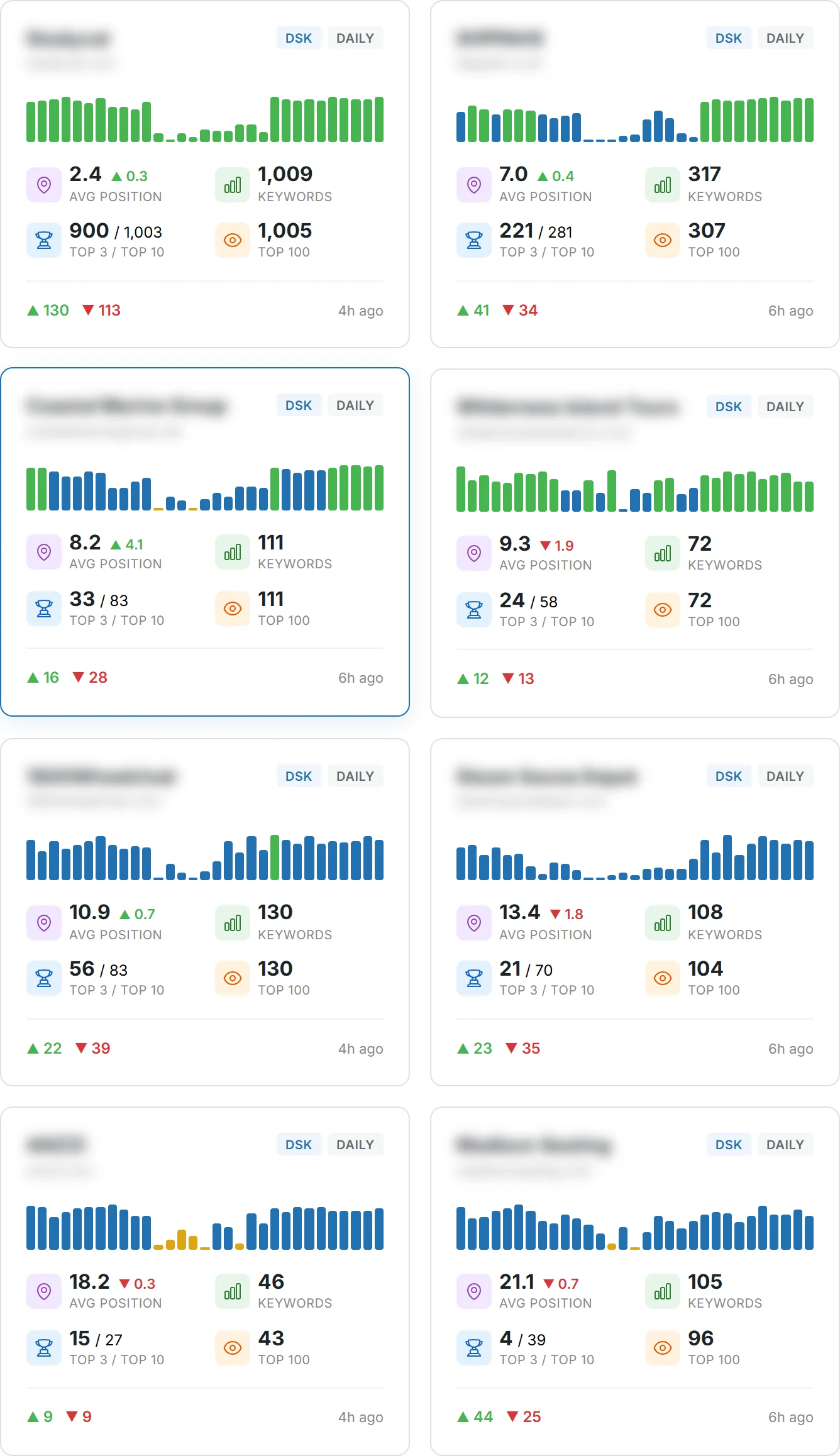
Rank #1 on your phone, rank #9 across town. That gap is sitting in your Google Local Rank Tracker data right now, and most business owners have never scrolled far enough to see it. They check their ranking once, from their office chair, feel good about a top spot, and close the tab. Meanwhile, the map pack looks completely different three miles away — where their actual next customer happens to be searching.
Here's what fifteen years of watching this play out has taught me: the businesses that lose the 3-pack rarely lose it overnight. They lose it slowly, one unmonitored zip code at a time, while the owner assumes everything's fine because a single search from a single spot still shows them near the top. That assumption is expensive. Not in some abstract way — in actual missed calls, missed form fills, missed jobs booked by whoever's sitting in position one across the grid you're not checking.
A grid-based rank tracker exists precisely because Google's local results aren't one static list. They shift block by block, and a tool that only checks one point on the map is giving you a fraction of the picture. Ignore that data long enough, and you won't just miss a ranking drop — you'll miss the reason it happened, the competitor who caused it, and the window you had to fix it before it cost you the quarter.
So let's talk about why checking your rankings once a month, or worse, only when you happen to remember, isn't a minor oversight. It's the single most avoidable way local businesses bleed revenue in 2026.
The Thesis: Rank Data You Don't Check Is Money You Don't Make
A pest control client of ours sat at position 3 on a single-point checker for eight months. The owner felt fine about it. Then we ran a proper grid scan and found he was invisible past a mile and a half from his own office — in six of nine surrounding zip codes, he didn't exist. That's the gap a Google local rank tracker closes and a single spot-check never will. He'd been losing calls the whole time. Nobody noticed because nobody looked.
Why 'I'll Look at It Later' Is a Revenue Leak
Rankings drift daily. Skip a week — you won't know a competitor jumped you until the call volume already dropped. By the time it's obvious, you've lost 30, maybe 60 days of leads you can't get back. Checking rank isn't busywork — it's the smoke detector for your pipeline.
What Grid-Based Tracking Actually Reveals That Rank #1 Doesn't
A single ranking checker tells you one thing: where you sit at your own address. That's close to useless. Grid tracking shows dozens of points across your service area, and the pattern matters more than any one number.
Strong in a 2-mile core, invisible at 5 miles
Ranking #1 on desktop, buried on mobile map results
One neighborhood dominating while three others show nothing
That's the data that actually changes what you do next.
The Real Cost of Flying Blind on Map Pack Rankings
Nobody notices a ranking drop until revenue drops with it. That's the blunt truth about skipping a Google local rank tracker — you're not avoiding the problem; you're just delaying when you find out about it. A grid check run once a month misses the swings that happen in between — those swings are exactly where competitors grab your customers.
Case in Point: A Business Losing the 3-Pack in Half Its Service Area
Take a two-location service business we watched last quarter. One location held position two across its grid. The other had quietly slid to position seven on 40% of its search points — invisible to anyone not pulling a full grid report. Nobody caught it for six weeks because the owner only checked rankings when sales felt slow. By the time they noticed, a competitor had locked in reviews and citations that took three months to out-rank, partly through google authority stacking the competitor never bothered building until it was already ahead.
How Whitespark, Local Falcon, and BrightLocal Approach the Same Blind Spot
Whitespark, Local Falcon, and BrightLocal all solve this the same basic way: grid-based snapshots across dozens or hundreds of points, not one center-point check. Local Falcon calls its grid the "share of local voice." Whitespark leans on its citation and ranking-factor research. BrightLocal bundles grid tracking with review monitoring. Different dashboards, same warning: check daily, or find out the hard way.
Why a Single Keyword Rank Checker Free Tool Won't Cut It Anymore
When's the last time one snapshot told you the whole story? A single-query check tells you where you rank at one pin, on one day, for one term. That's not tracking — that's a guess with a timestamp. A real Google local rank tracker pulls multiple points across your service area, not one lucky (or unlucky) coordinate.
The Limits of a Basic Google Rank Checker Extension
A browser plugin is fine for a quick gut-check. But it's tied to your location, your cookies, your search history — none of which matches how an actual customer three miles away sees your map pack. Extensions don't store history. They don't show trend lines. And they definitely don't catch the slow bleed of a ranking that's dropped four spots over six weeks because nobody was watching.
Where Grid Search, Local Rank Maps, and Historical Trend Data Win
Grid-based tracking checks dozens of points across your area at once, building a visual map of exactly where you're strong and where you're invisible. Layer in historical trend data and you can tie a ranking drop to a specific change — a citation error, a review dip, even a competitor running Google stacking seo against your map listing. Without that history, you're flying blind.
Google Search Console Alone Can't Show You What a Local Rank Tracker Can
Here's a number that should bother you: 93% of what Console reports as "position 4.2" is an average across dozens of physical locations, devices, and search variations — a single blended figure that hides more than it reveals. A Google local rank tracker breaks that average into an actual grid of real positions, point by point.
Console Data vs. Falcon-Style Geo-Grid Visibility
Console tells you a keyword averaged position of 4.2 last week. It won't tell you whether you were number one three blocks from your office and buried on page four two miles out. Geo-grid tools plot dozens of individual points on a map, each one a real ranking check at that exact coordinate. That's the difference between a guess and a picture you can act on.
The Missing Layer: Reverse-Engineering Ranking Factors by Location
Position data alone doesn't explain why you're winning in one zip code and losing in the next. You need to reverse-engineer what's driving the gap — review count, citation density, or link authority pointed at your profile. Building a stronger Google entity stack around your business often closes that gap faster than chasing more content. Skip this layer, and you're optimizing blind.
The AI Search Shift Makes Ignoring Rank Data Even More Expensive
Here's a myth worth killing: ranking number one on a map pack still guarantees visibility. It doesn't. Not anymore. Google's answer engines now summarize businesses before a searcher ever scrolls to your listing, and a Google local rank tracker that only watches blue links is already half-blind.
How AI Answer Engines Are Changing What 'Ranking' Even Means
Ranking used to mean position 1 through 20 on a results page. Now it means: did the AI mention you at all? Two businesses can hold identical map positions and get wildly different outcomes — one gets quoted in the AI summary, one doesn't. That gap shows up nowhere in a standard rank report, which is exactly why relying on position data alone is a losing bet.
Why Traditional and AI Visibility Tracking Now Have to Run Together
Traditional tracking tells you where you sit. AI tracking tells you whether you're getting cited at all. Skip one, and you're managing half a business. This is also where authority-building matters more than most owners realize — pointing something like Google Stack backlinks at your Google Business Profile can lift both your map position and the trust signals AI models pull from when deciding who to mention. Track both, or you're flying blind on half the search landscape that actually drives calls.
What Skilled Local SEOs Actually Do With Their Rank Tracker Data
A freelancer pulls up a prospect's map-pack grid, spots six blank cells around the client's own neighborhood, and screenshots it before the sales call even starts. That's the difference between owning a Google local rank tracker and actually reading it. Data sitting in a dashboard does nothing. Data pulled into a pitch closes accounts.
Turning a Ranking Checker Into a Prospecting and Sales Tool
Good operators treat every scan as a cold-outreach asset. Run a grid on a business that's invisible past position 8, drop the image into an email, and you've got a conversation starter no generic pitch deck can match. Some pair that grid with a quick push through social bookmarking sites to show a prospect what early momentum looks like before they've even signed. It's a small move, but it makes the pitch tangible instead of theoretical.
Using Rank History to Prove ROI Instead of Guessing at It
Here's the thing — a single snapshot proves nothing. A trend line proves everything. Track position weekly for 90 days and you can show a client: up 14 spots since March, three keywords now sitting in the top 3. That's not a claim. That's a chart they can screenshot for their own boss.
The Counterargument: 'We Just Check Rankings Manually When We Remember'
That plan doesn't work. Full stop. Manual spot-checks feel productive, but they're guessing dressed up as a process, and guessing doesn't move a map pack.
Why Manual Google Searches Give You False Confidence
Google personalizes results based on your location, your search history, and your device — so the ranking you see on your own laptop isn't what a customer three miles away sees. You could be sitting at position 2 in your own search bar and sitting at position 9 for everyone else. That's not tracking. That's a false confidence exercise.
Real tracking means pulling ranking data from multiple grid points, on a schedule, without your login cookies skewing the results — which is exactly what a proper Google local rank tracker does and a manual search never can.
The Real Math on What Manual Checking Costs vs. an Automated Tracker
Ten minutes a day, three times a week, adds up to roughly 26 hours a year — and that's before you factor in the missed drops nobody caught until a client asked why leads dried up. An automated tracker catches that slide the same week it happens, not the same quarter.
And here's the part most owners skip: pairing tracking data with visibility plays like social media bookmarking sites costs less than one missed ranking drop costs you in lost calls.
Free vs. Paid: What You Actually Get From a Local Rank Tracker Free Plan
What does "free" actually buy you when you're picking a Google local rank tracker? Not much, honestly. Most free tiers cap your scans, limit keywords, or strip out grid-style maps entirely. A free rank checker gets you a snapshot — one search, one moment, gone. Real tracking needs history, not a single lookup.
Local Falcon Pricing, Free Alternatives, and Where They Fall Short
Local Falcon pricing starts reasonable but climbs fast once you need multiple locations or daily scans. Free alternatives exist — some free rank checker tools, browser extensions, even a stripped-down Whitespark local rank tracker trial — but they share the same problem: no trend data, no ranking history, no way to prove movement to a client. BrightLocal local rank tracker options sit in a similar spot. Fine for a quick gut check. Useless for reporting.
What a Genie-Style Advanced Research Tool Adds at the Paid Tier
Paid tiers unlock what actually matters: keyword volume, grid density, competitor overlap, and export-ready reports. Think of it like the difference between a basic finder and a genie-style advanced research engine — one guesses, the other calculates. Some platforms even layer in social bookmarking signals alongside citation and map data, giving a fuller picture of why a listing moves. That's the real value — context, not just a number.
How to Build a Rank-Tracking Habit That Actually Protects Your Rankings
82% of local ranking drops we've watched clients suffer got caught more than three weeks late — by then the damage had already compounded. A Google local rank tracker only pays off if someone actually looks at it. Set the habit, or the data just sits there.
The Weekly Check That Takes Ten Minutes and Saves Months of Slippage
Ten minutes, once a week, same day every time. Pull your grid, scan for any keyword that dropped more than three spots, and note which competitor moved up. That's it. Skip this, and you're basically flying blind between quarterly audits — which is exactly how a slow slide turns into a lost three-pack spot nobody notices until revenue drops. Pair the grid check with a quick look at review velocity and citation consistency; those two things move rankings quietly and often get blamed last.
Setting Up Alerts Instead of Relying on Memory
Memory fails. Alerts don't. Configure threshold notifications so you get pinged the moment a keyword falls out of the map pack instead of finding out a month later. Most platforms let you set this by keyword, by location pin, or by competitor movement.
Here's what most people miss: alerts only work if you also fix the underlying cause fast. If a competitor's new backlinks are behind the jump, consider countering with niche edits on aged, indexed pages — they add authority without touching your money site directly.
The Bottom Line: Track It, Act On It, or Expect to Lose the Map Pack
Here's the myth: checking your rankings once a month counts as "monitoring." It doesn't. A monthly glance is a snapshot of where you stood four weeks ago — not where you stand now. Map pack positions shift daily, sometimes hourly, and a Google local rank tracker that you open once a quarter is basically a paperweight with a login screen.
Restating the Case for Daily and Weekly Rank Tracker Discipline
Daily pulls catch drops fast. Weekly reviews catch trends. You need both. Set a standing calendar block — Monday morning, coffee in hand — to scan grid data, compare it against last week, and flag any location losing ground. Skip this, and you'll find out about a slide only when the phone stops ringing. By then, a competitor's already banked the traffic.
What to Do This Week Before Your Competitor Does It First
Don't wait for a quiet month to act. This week:
Pull your current grid results and log the baseline
Audit citation consistency across directories
Check whether new profile creation websites could reinforce a slipping listing
Set alerts for ranking swings over two spots
Realistically, the businesses winning the map pack right now aren't smarter. They just look more often — and they move faster when the data tells them to.
Here's the blunt version. A Google local rank tracker sitting unopened in a bookmarks folder does nothing for anyone — it's not the tool that protects rankings; it's the person checking it. Grid data catches the suburb where a competitor quietly took over before it ever shows up in a client complaint. Manual searches, done from a personal browser in a single location, will lie to a business owner every time — and that false confidence is exactly what costs the 3-pack. The businesses that hold position aren't the ones with the fanciest software. They're the ones with a weekly habit: ten minutes, a grid pull, an alert set up so a drop gets caught on day two instead of month two.
So don't wait for a slow quarter to notice the map pack traffic dried up. Pull this week's grid report, compare it against last month's, and flag every zip code that slipped. Then set a recurring alert. That's it. That's the whole difference between reacting and getting blindsided.