
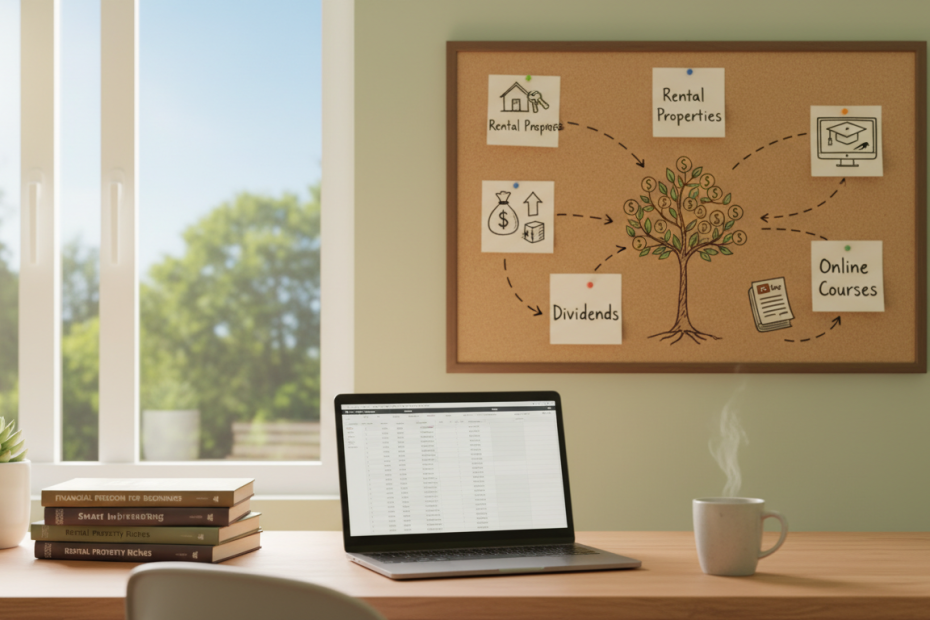
Surprising fact: you can open a high-yield savings account with as little as $25 and start earning interest right away, a simple step that shows small moves add up fast.
By 2026, new digital tools make it easier to manage multiple revenue streams from your phone or laptop. You don’t need to quit your day job to let your money start doing more for you.
Start by setting clear goals and choosing low-barrier entry points. Some paths let you generate passive income with minimal time and modest investment up front.
Remember: most reliable strategies need a short period of work or oversight before they become hands-off. Small, intentional steps can grow into steady cash that supports your life and plans.
Key Takeaways
- You can earn passive income with small deposits and smart accounts.
- New tech in 2026 lowers the barrier to manage multiple streams.
- Set clear financial goals before you choose an investment path.
- Most methods need upfront effort but offer long-term time freedom.
- Start small; steady steps build a portfolio that earns cash while you focus on other priorities.
Understanding the Reality of Passive Income
Understanding how you trade hours for wages versus how assets earn on their own helps you plan better.
Active income comes from work you do personally, like a 9-to-5 or freelance gigs. You exchange your time for pay from a job or contract.
Defining Active versus Passive Income
Passive income refers to revenue that keeps coming after the main work or investment is done. Examples range from dividends to royalties.
The Importance of Upfront Effort
Most reliable streams need real setup. You may spend weeks building a product, investing capital, or automating processes.
Even after setup, expect occasional checks to protect your returns. Monitoring helps you spot declines and fix problems early.
- Pick types that match your schedule and risk comfort.
- Use small, steady investments of time or money to reduce stress.
- Balance active income with passive systems to diversify your revenue.
Passive income ideas that actually work for beginners in 2026
Digital platforms now let you launch earning projects with a few hours of setup and little capital.
E‑commerce, online courses, and content creation are leading trends. These methods pair well with automation tools and simple marketing to help you manage multiple streams from one dashboard.
Start by researching demand in a niche you enjoy. Pick a single path — like a mini course or a digital product — and promote it through social channels and an email list.
Scale by automating tasks such as delivery, payment, and customer support so your projects need less hands-on time. Small investments of money and time now can produce steady revenue later.
- Choose one niche and test with low upfront costs.
- Build an audience with short, consistent content.
- Reinvest early earnings to grow reach and sales.
| Method | Typical Setup Time | Upfront Cost | Best Use |
|---|---|---|---|
| E‑commerce (print on demand) | Few hours to days | Low ($0–$100) | Scalable product sales |
| Online course | Days to weeks | Low–Medium ($50–$500) | Knowledge monetization |
| Content & affiliate | Ongoing | Very low | Audience monetization |
| Real estate REITs | Minimal | Low–Medium | Hands-off property exposure |
Leveraging High-Yield Savings and Interest Accounts
Small balances can start earning meaningful interest when you choose the right account. High-yield savings pay an APY that often beats regular checking, and some banks let you get started with as little as $25.
Why this matters: using interest-bearing accounts is one of the easiest passive income ideas to set up. You let your cash grow with no daily effort, and you keep quick access to funds when you need them.
Comparing CDs and Money Market Accounts
Certificates of deposit (CDs) lock your money for a set term and deliver guaranteed returns. They suit a clear time horizon and protect you from market swings, but watch early-withdrawal penalties.
Money market accounts usually offer higher APYs than checking and retain liquidity. They balance yield and access, making them handy if you want better returns without locking funds away.
- Compare APYs across banks—small rate differences add up.
- Check balance tiers and bonus rates to maximize returns.
- Use these accounts as a cash foundation before other investment steps.
Building Wealth Through Dividend Stocks
When you pick dividend-paying companies, you tap into a system that converts company profits into regular payouts.
Dividend stocks are shares of firms that return part of earnings to shareholders on a set schedule. Blue-chip names like Procter & Gamble, Johnson & Johnson, and Coca-Cola have long histories of raising payouts.
Yields change because stock prices move. That means your dividend yield may rise or fall even if the company keeps paying.
Do your homework: check debt levels, cash on hand, and the payout ratio before you invest. These metrics show whether a company can sustain or grow its dividends over time.
- Use dividends as steady income or to buy more shares.
- Diversify across sectors to reduce single-company risk.
- Reinvest payments to compound growth and increase cash flow later.
| Metric | Why it matters | Target |
|---|---|---|
| Payout ratio | Shows share of earnings paid out | Under 60% is prudent |
| Debt load | High debt can threaten payouts | Lower is safer |
| Cash on hand | Ability to cover dividends in downturns | Healthy reserve preferred |
Exploring Real Estate Investment Trusts
Real estate trusts let you own slices of large property portfolios without buying a building yourself.
REITs are publicly traded firms that hold apartments, offices, retail centers, and storage units. You buy shares and gain exposure to many properties at once.
This approach offers liquidity and diversification compared with direct rental properties. You avoid tenant management and large upfront capital.
Most REITs pay regular dividends, letting you generate passive income from rental receipts and property appreciation. Professional managers handle day-to-day operations.
- Research a REIT’s portfolio and dividend history before you invest.
- Compare yields, fees, and sector mix to match your goals.
- Remember market risk—real estate values and returns can fluctuate.
| REIT Type | Typical Assets | Liquidity | Typical Yield |
|---|---|---|---|
| Equity REITs | Apartments, retail, offices | High (traded) | 3%–6% |
| Mortgage REITs | Property loans, mortgages | High (traded) | 6%–12% |
| Hybrid REITs | Mix of properties and loans | High (traded) | 4%–9% |
Renting Out Your Existing Assets
Look around your home—unused rooms, garages, and parking spots can become steady monthly payouts.
Renting spare space is one of the simplest passive income ideas you can try with almost no capital.
List a spare room on short-term rental platforms or lease a garage for storage. Peer-to-peer sites also let you rent tools or high-end products when you are not using them.
Vehicle Sharing Services
If your car sits parked most days, vehicle sharing apps let you earn money when others borrow it.
- You can generate passive revenue without buying new rental properties.
- Use trusted platforms to handle bookings and payments.
- Keep insurance and clear agreements in place to reduce risk.
| Asset | Typical Setup | Monthly Return |
|---|---|---|
| Spare room | List photos, set rules | $200–$1,200 |
| Parking/garage | Simple listing | $50–$300 |
| Car sharing | App signup, insurance | $100–$800 |
| Tools & equipment | Peer rental platform | $20–$200 |
These streams let you turn underused property into steady cash while you spend time on other goals. Start small and scale as you learn the market.
Monetizing Creative Skills Through Royalties
Turn your creative work into recurring royalty checks by placing it where users and businesses can license it. Royalties are payments you collect when others use your books, songs, photos, or designs.
Writers and songwriters earn each time a sale or stream happens. Designers sell templates on marketplaces like Etsy and get paid repeatedly for the same product.
Royalties can last years after your initial effort. You may receive lump sums or ongoing percentages tied to sales or usage.
“Create once, collect many times — licensing turns your work into steady payments.”
- Protect your work with copyrights and clear licenses.
- Self-publish or license music to companies that need ready-made content.
- Consider buying existing royalty streams via platforms such as Royalty Exchange if you have capital to invest.
Focus on quality and demand. Spend time refining your craft, then let licensing and smart distribution turn that effort into long-term income and a scalable investment of your creative work.
Starting a Blog for Long-Term Revenue
Blogging gives you a public home where your expertise can attract readers and convert attention into steady returns. You build trust, rank in search engines, and keep control of your audience.
Pick a niche you enjoy and publish clear, helpful content on a regular schedule. Small posts that solve real problems win readers over time.
Effective Monetization Methods
Monetize using a mix of tactics so one channel doesn’t carry all the risk.
- Affiliate links placed inside high-value posts to generate passive income streams.
- Sponsored posts and display ads via platforms like Google AdSense for steady ad revenue.
- Sell digital products or services to diversify revenue and reduce reliance on ads.
You can also buy an existing blog if you lack time. Treat your site like a small business: track metrics, test marketing, and reinvest early money to grow traffic and long-term value.
Creating and Selling Digital Products
Creating digital products is one of the top passive income ideas you can pursue. Turn your expertise, art, or templates into files people buy again and again.
Research platforms where you can sell digital goods. Marketplaces, your own site, and course hosts each reach different audiences. Set a price that matches value and tests well with early buyers.
Marketing matters. Use social posts and an email list to drive launches and ongoing sales. Automate delivery and payments so your product sells 24/7 with minimal upkeep.
- Focus on one product that solves a clear problem in the market.
- Bundle related items to increase average order value and perceived value.
- Listen to customer feedback to improve offerings and generate more revenue over time.
| Product Type | Setup Time | Typical Price |
|---|---|---|
| E‑book / Guide | Days to a week | $5–$50 |
| Template / Planner | Hours to days | $8–$40 |
| Mini course | Weeks | $30–$200 |
| Digital art / assets | Days | $5–$150 |
Utilizing Affiliate Marketing Strategies
Promoting trusted products through affiliate programs turns useful content into measurable revenue.
How it works: you join a company’s affiliate program and share links on your blog, social pages, or email list. When readers buy through your link, you earn a commission.
Pick programs that match your niche and offer fair commissions. Aligning products with your audience builds trust and improves conversions.
Create helpful content—reviews, tutorials, and comparisons—so links feel natural. High-quality content drives clicks and long-term sales without heavy daily work.
- Be transparent about affiliate relationships to keep credibility.
- Use multiple platforms to widen reach and scale revenue.
- Track clicks and sales so you can focus on top-performing partners.
| Program | Typical Commission | Best Content Type | Why it Fits |
|---|---|---|---|
| Amazon Associates | 1%–10% | Review posts, comparisons | Large product range; easy links |
| ShareASale | 5%–30% | How-to guides, niche posts | Many niche companies; flexible tools |
| Commission Junction | 5%–25% | Roundups, case studies | Reliable tracking; big brands |
| Digital product affiliates | 30%–70% | Course reviews, tutorials | High payouts; strong recurring revenue |
“Focus on useful content and honest recommendations—readers reward helpfulness with clicks and trust.”
Launching an Online Course
Turn your expertise into a structured course and reach learners around the globe.
Creating an online course lets you earn passive income by packaging skills into a sellable product. Platforms like Udemy, Teachable, and Coursera handle hosting, payments, and delivery so you can focus on the lessons.
Start with a validated topic. Run a quick survey or a free webinar to confirm demand. Build clear modules and record short videos that teach one idea at a time.
Marketing drives sales: use social posts, content marketing, and email campaigns to attract students. Show testimonials and student wins to build trust and increase conversions.
- Create evergreen content that needs minimal updates.
- Offer introductory pricing or a free mini lesson to boost early enrollments.
- Build a community around the course to increase referrals and repeat sales.
| Stage | Action | Expected Time |
|---|---|---|
| Validate | Survey, pilot session | 1–2 weeks |
| Create | Script, record, edit | 2–6 weeks |
| Launch | Marketing, pricing, testimonials | 1–3 weeks |
“Create once, sell repeatedly — an online course is a scalable way to turn your knowledge into steady revenue.”
Generating Revenue with Stock Photography
Stock libraries let your best images work behind the scenes so you earn without client work. You can generate passive income by licensing photos to businesses and creators who need ready-made visuals.
Upload high-quality shots to well-known platforms such as Shutterstock, Adobe Stock, Getty Images, and iStock. Each sale earns royalties, turning a single photo into repeated revenue over time.
Build a focused portfolio that matches market demand. Research trending themes and tag images clearly so buyers find your content fast.
Keep adding fresh photos on a schedule. Regular updates increase visibility and improve your chances of steady sales.
- Promote your profiles via social channels and a personal website to drive traffic.
- Use earnings to fund new gear or reinvest in education to raise your craft.
- Focus on quality, accurate metadata, and niche subjects to stand out.
“A single strong image can deliver long-term cash while you focus on new projects.”
Exploring Peer-to-Peer Lending Opportunities
You can act like a bank by funding loans on P2P platforms and collecting interest payments over time.
Peer-to-peer (P2P) platforms connect individual lenders with borrowers, letting you earn interest that often beats a regular account.
Platforms such as LendingClub and Prosper give tools to assess borrower risk. Use their scores and loan details to make informed investment choices.
Diversify across many small loans to reduce the impact of any single default. Spreading your money helps protect returns while you build steady cash flow.
Remember: higher returns come with higher risk. Track loan performance, reinvest payments, and adjust your strategy as you learn the market.
- Compare platforms and read user reviews before you sign up.
- Start with a small allocation and expand once you understand defaults and returns.
- Use automated filters to pick loans that match your risk comfort and time horizon.
“Acting as a direct lender can diversify your portfolio and let your money work while you focus on other goals.”
Managing Your Tax Obligations
Reportable earnings can come from many places, so track each one carefully.
The IRS requires you to report all income, including money from investments, dividends, and rental receipts. Keep clear records of each account and payment so you can file accurately.
Rental revenue often allows deductions. Expenses like repairs, insurance, and depreciation can lower your taxable amount. Save receipts and log dates to support those claims.
Dividends and other investment payments split into qualified and nonqualified types. Your adjusted gross income affects the tax rate. Knowing the difference helps you plan withdrawals and reinvestments.
You may need to pay quarterly estimated taxes to avoid penalties. Set aside cash regularly and review payments each quarter so you’re not scrambling at year end.
- Keep detailed records of income and expenses year-round.
- Use simple software or a spreadsheet to log transactions by date.
- Talk with a tax professional to optimize deductions and stay compliant.
“Proper tax planning is an investment in your financial health.”
Stay organized and proactive—it saves time and helps you keep more of the money you earn.
Setting Realistic Financial Goals
Decide whether you want to supplement your current income or replace your job over time. That choice shapes the types of projects, how much time you invest, and the level of risk you accept.
Start by assessing your cash flow, debts, and savings. Set clear, measurable targets—monthly cash goals, an investment amount, and a timeline to hit each milestone.
Use digital tools to track progress. Spreadsheets, budgeting apps, and portfolio dashboards show how each strategy moves you toward your goals.
- Specific: name the dollar amount you want each month.
- Measurable: pick dates and tracking steps.
- Adjustable: revise plans as you learn more about real estate or digital products.
“Clear goals keep you motivated and make every investment decision easier.”
Conclusion
Close with a reminder: steady habits and smart choices compound into meaningful gains. Treat each small step as progress toward larger financial goals.
Diversify your income so one source does not carry all the risk. Mix accounts, dividends, rented assets, and digital products to spread exposure.
Every investment you make—whether time or capital—moves you closer to long-term freedom. Start small, stay consistent, and adjust your plan as you learn.
The effort you put in today increases flexibility and security for your future self. Keep tracking results and celebrate steady wins along the way.